Citizens' Assembly in Heilbronn: Experience City Politics
Experience Citizens' Assemblies & City Politics in Heilbronn Live in the Future
If you want to understand in the coming months and years how decisions are prepared in Heilbronn, you will find a particularly direct access in citizens' assemblies: topics are explained publicly, questions are asked, and concerns from the urban society are transferred into a formally documented process.
Note on the focus of this article: This article describes exclusively how you will be able to find, attend, and use future citizens' assemblies in Heilbronn for your concerns.
What a Citizens' Assembly in Heilbronn Will Offer in the Future
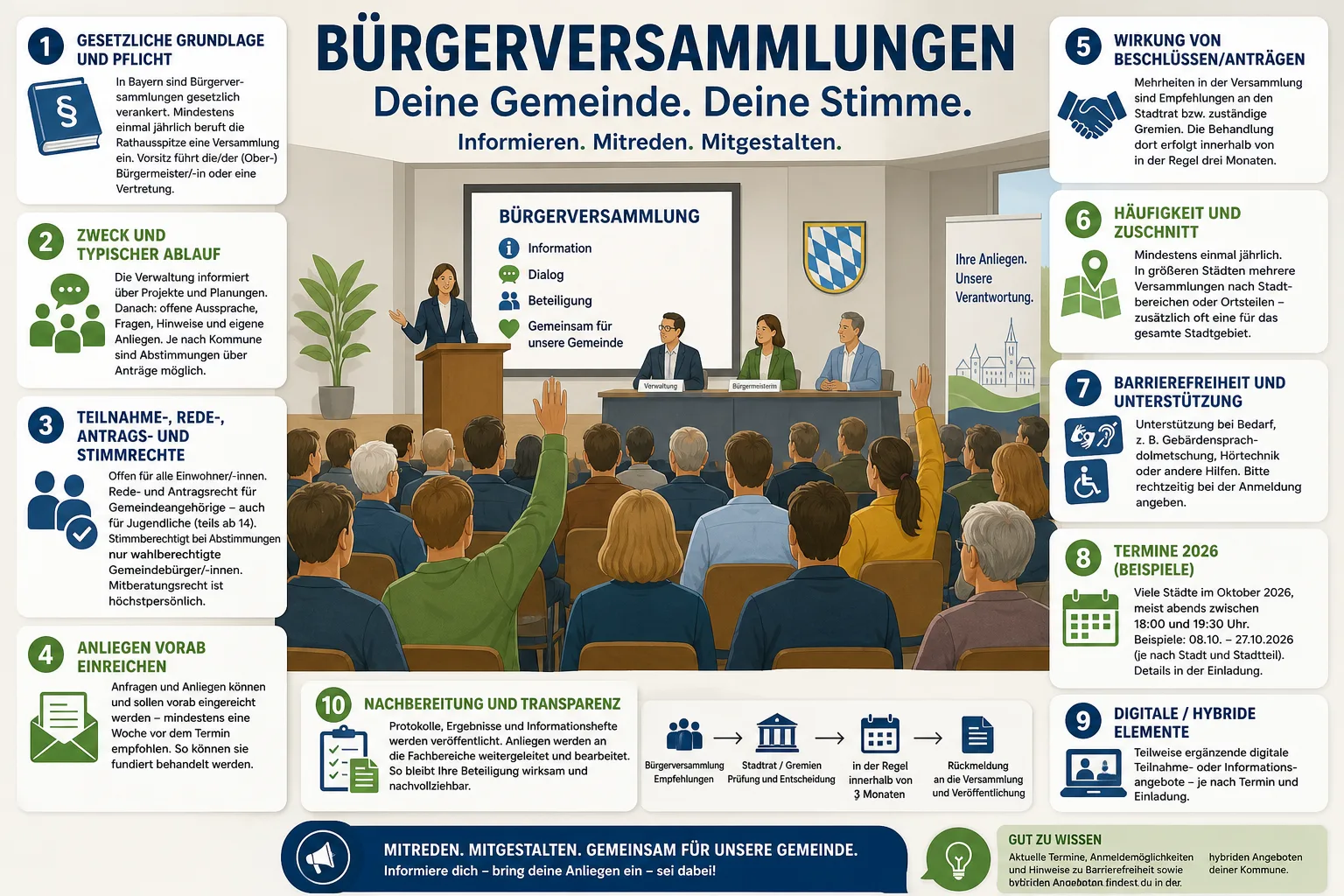
A citizens' assembly will present itself to you in Heilbronn as a public participation format in which municipal projects, plans, and concerns are made transparent and discussed. There you will be able to ask questions, bring in everyday observations, and place topics that will later be further processed in the administration and municipal committees.
In Baden-Württemberg, citizen participation at the municipal level is legally framed. For Heilbronn, municipal law principles (e.g., public access, responsibilities, procedural rules) will be particularly relevant. Binding details (e.g., convening, form, documentation) can be found in the current announcements of the city and the relevant legal foundations.
Where You Will Find Upcoming Dates & Agendas
When citizens' assemblies (or comparable citizen formats) are announced soon, you will typically find information in these places:
- Official Website of the City of Heilbronn: Announcements, event overviews, and information on registration or entry rules.
- Official Announcements: Depending on the format, you will see the location, time, and topic(s) published in advance there.
- Council or Committee Information System: For subsequent consultations (committees, city council), you will be able to track meeting dates, templates, and resolutions there.
- City Newsletters & Social Media Channels: There you will often receive short announcements and reminder notices.
If you want to place a topic specifically (e.g., traffic safety, district development, noise, green spaces), it will be worthwhile to read the announcements early: There you will often find deadlines or contact methods through which questions can be submitted in advance.
How the Process Will Likely Be Structured
Even if the concrete design may vary from appointment to appointment, a future process will usually be clearly structured. This will allow you to quickly orient yourself even as a first-time visitor:
- Welcome and Opening: The assembly will be opened and the process explained (speaking times, order, handling of requests to speak).
- Information Section: Current projects will be presented (e.g., mobility, construction projects, education, climate, safety, district topics).
- Questions & Discussion: You will be able to ask questions and give hints; the administration and, if applicable, elected officials will respond.
- Concerns/Requests from Citizens: Depending on the format, concerns will be recorded, bundled, or passed on as formalized proposals.
- Documentation: Results will be recorded in minutes/protocol form so that further processing remains traceable.
You can often expect evening appointments, as this allows more people to participate. The exact duration will depend on the number of speakers and the abundance of topics.
Which Participation Rights You Will Be Able to Use in Practice
So that you not only inform yourself in the future but also participate effectively, these points will be particularly relevant for you:
Participation
You will generally experience citizens' assemblies as public events. Whether and in what form guests without residence may participate will depend on the specific format and participation conditions; the official announcement will give you the most reliable information on this.
Right to Speak
In the discussion, you will typically have the opportunity to request to speak. Lists of speakers, time limits, and thematic bundling are common so that the assembly remains workable.
Submitting Concerns
If you want to bring in a concern, you will formulate it most effectively if it is concrete, locally clear, and verifiable (e.g., "crossing safety at X", "lighting at Y", "bike routing along Z"). You will often be able to use a pre-submission so that departments can prepare verifiable answers.
Voting (if provided)
Whether votes take place and what character they have will be determined by the respective format. If there are votes, participation and voting rights will usually be explained in advance (e.g., relation to residence or municipal membership).
How Your Concern Will Be Processed After the Assembly
If you bring in a topic, the decisive point will not be the applause in the hall, but the subsequent processing. Typically, the following will happen:
- Documentation: Your concern will be recorded in the result document (e.g., minutes, summary, action list).
- Responsibility Check: The administration will check which department is responsible (and whether other bodies are involved).
- Feasibility and Legal Check: It will be checked what is legally permissible, how it can be financed, and what effects are to be expected.
- Forwarding to Committees: If a political decision is required, the topic will be discussed in the responsible committees or in the city council.
- Feedback/Transparency: You will be able to track the status via published documents, notifications, or minutes.
For your effectiveness, it will be crucial that you follow the public documentation after the assembly and follow up if necessary: this way, an impulse becomes a process with verifiable intermediate steps.
Accessibility, Language, and Digital Participation: What You Can Expect
For upcoming appointments, you will usually find notes in the announcement that will make participation easier for you:
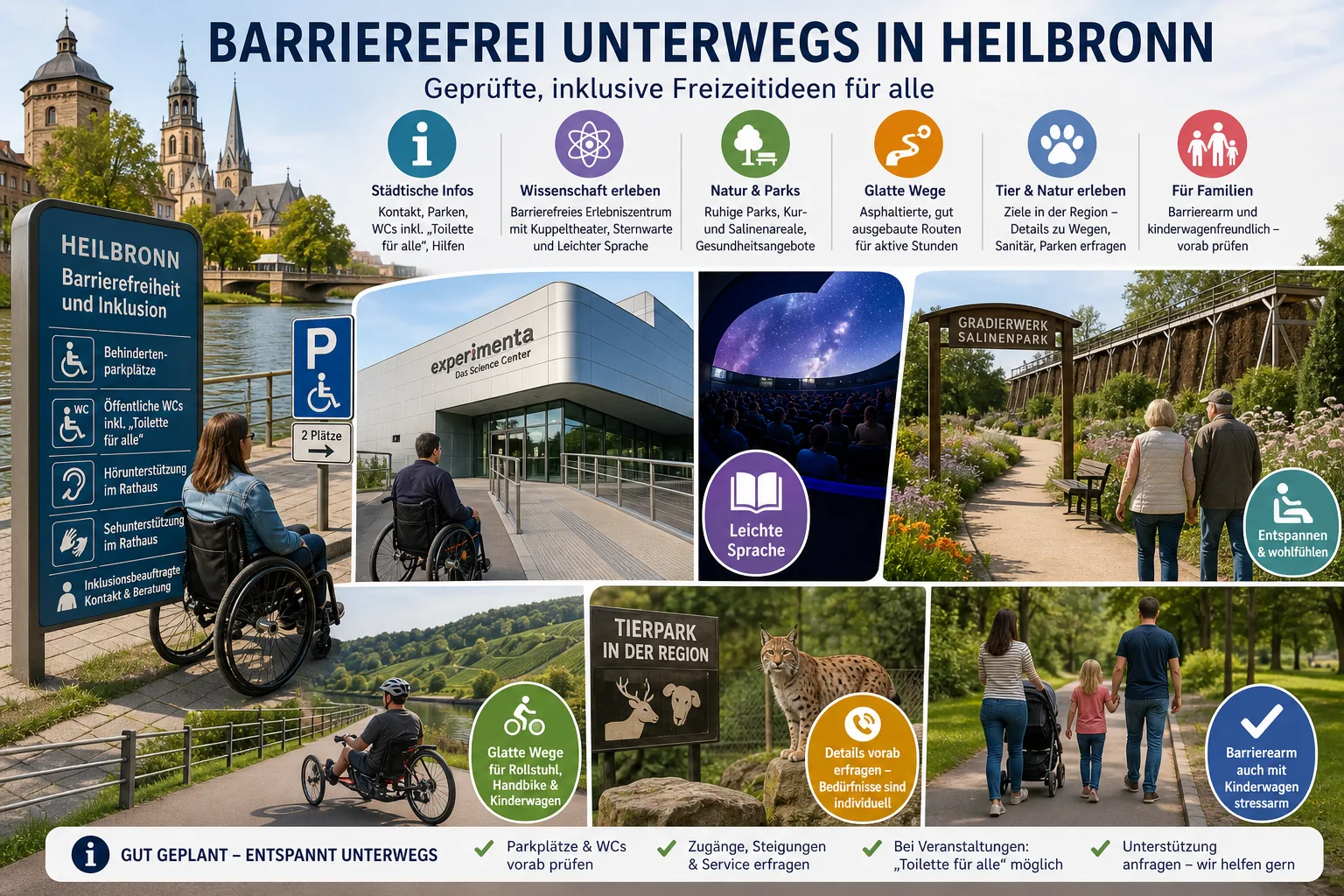
- Barrier-free Access: Information on step-free access, elevators, accessible toilets, or reserved seats.
- Hearing Support/Assistance: Information on whether technology or assistance is offered and how you can request it in time.
- Linguistic Comprehensibility: You will more often receive summaries, visualizations, or explanations so that content remains understandable.
- Digital Additions: Depending on the appointment, you can expect livestreams, document downloads, or online channels for questions. Whether hybrid participation will be possible depends on the respective format.
If you need special support, it will be best for you to use the contact points mentioned in the invitation early so that the organization can be reliably arranged.
How You Will Prepare Effectively
With a short, structured preparation, you will be able to achieve significantly more in the upcoming citizens' assembly:
- Formulate a Clear Goal: You will be most effective if you state a concrete question or a specific change (instead of just describing dissatisfaction).
- Specify Location and Situation: You will name street names, intersections, time windows, or affected groups so that departments can immediately classify them.
- Bring Evidence: You will be able to use short bullet points, photos (e.g., danger spots), or measurement/observation data without getting lost in details.
- Bundle Multiple Perspectives: If neighbors, initiatives, or associations share your concern, you will be able to create more weight through coordinated contributions.
- Follow Up: You will immediately note which office is responsible and what next steps have been announced so that you can specifically check later what becomes of it.
If you proceed in this way, your participation will not only be heard but also translated into a processable procedure.