
Elisabeth Brauß
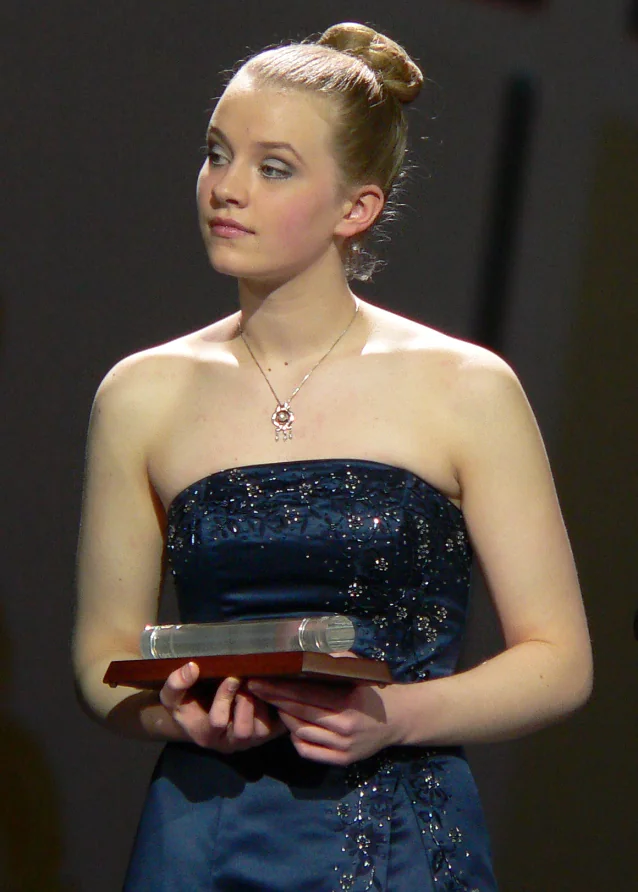
Image from Wikipedia
Image from Wikipedia
Elisabeth Brauß – the sensitive German pianist with international appeal
A young artistic personality with astounding maturity
Elisabeth Brauß, born in 1995 in Hannover, belongs to a generation of female pianists who do not view virtuosity as an end in itself, but rather as a means to achieve musical depth, tonal culture, and narrative precision. Her biography combines early encouragement, international competition successes, and an artistic development that already surpasses the status of a young talent. In recent years, she has established herself as a highly sought-after soloist, chamber musician, and stylistically versatile interpreter. ([de.wikipedia.org](https://de.wikipedia.org/wiki/Elisabeth_Brau%C3%9F))
Early influences and musical education
Elisabeth Brauß began her journey to the piano at an unusually early age: she has been playing since she was four years old, and at six, she was accepted into the class of Elena Levit. In 2006, at the age of eleven, she made her debut as part of the symposium "Wunderkinder" at a chamber concert in Stuttgart, a first public indication of her remarkable musical maturity. This was followed by early support at the IFF of the Hochschule für Musik und Theater Hannover, her studies at the HMTMH, and work with teachers such as Matti Raekallio and Bernd Goetzke. ([de.wikipedia.org](https://de.wikipedia.org/wiki/Elisabeth_Brau%C3%9F))
This education is crucial to her current profile, as it has combined technical mastery with analytical thinking and a finely tuned sense of musical architecture. Brauß comes from a musically inclined background; her father, Martin Brauß, is a music college teacher and conductor, which likely further shaped her artistic socialization. From an early age, she was not just an interpreter but a musician with a conscious view of form, color, and structure in a work. ([de.wikipedia.org](https://de.wikipedia.org/wiki/Elisabeth_Brau%C3%9F))
Competitions, awards, and early breakthrough
The artistic breakthrough did not come by chance, but as a result of consistent work and continuous presence at a high level. Elisabeth Brauß won first place at "Jugend musiziert" in 2002 and 2004, as well as multiple awards at the International Grotrian-Steinweg Competition and the Steinway Piano Competition in Hamburg. In 2012, she received the Praetorius Promotion Prize Niedersachsen, and in 2013, she won the TONALi Grand Prix in Hamburg with both the main and audience prizes. ([de.wikipedia.org](https://de.wikipedia.org/wiki/Elisabeth_Brau%C3%9F))
These awards signify more than just competition success: they highlight a pianist who impressed early on multiple levels – technically, musically, and communicatively. That she performed Beethoven's Third Piano Concerto with the Deutsche Kammerphilharmonie Bremen after winning TONALi underscores her status as a soloist with orchestral presence and classical concert maturity. Such milestones shape a career based on substance rather than showiness. ([de.wikipedia.org](https://de.wikipedia.org/wiki/Elisabeth_Brau%C3%9F))
International concert career and stage presence
Today, Elisabeth Brauß is present on significant concert stages, including the Elbphilharmonie Hamburg, the Konzerthaus Berlin, the Tonhalle Zürich, Wigmore Hall, the BBC Proms setting, and numerous international festivals. Her performances encompass solo recitals, chamber music, and concerts with renowned orchestras such as the BBC Philharmonic, the NDR Radiophilharmonie, the Deutsche Kammerphilharmonie Bremen, and the Finnish Radio Symphony Orchestra. Her profile is that of a versatile, internationally connected concert pianist. ([elisabethbrauss.com](https://www.elisabethbrauss.com/about/))
Particularly noteworthy is her presence in institutions that stand for classical excellence and artistic authenticity. Her selection for the BBC New Generation Artist Scheme for 2018/19 and 2019/20, as well as the Terence Judd-Hallé Award, underscores her position as one of the most exciting musicians of her generation. As a debutant at the BBC Proms in 2021 with Mozart's Piano Concerto No. 23, she also demonstrated her ability to impress within the large symphonic framework with clarity, stylistic awareness, and control. ([elisabethbrauss.com](https://www.elisabethbrauss.com/about/))
Chamber music as an artistic core field
Elisabeth Brauß is not only a soloist but also an exceptionally active chamber musician. Her regular partners include trumpeter Simon Höfele and violinist Noa Wildschut; together with Wildschut, she toured Australia in 2023. This collaboration points to an artistic stance that places dialogue, breathing, and collaborative music-making at the forefront. ([elisabethbrauss.com](https://www.elisabethbrauss.com/about/))
Especially in chamber music, her ability to model sound distinctly and weave musical lines precisely is evident. Critics praise her not only for technical brilliance but also for maturity, sophistication, and a carefully considered interpretative art. This is an important characteristic of her musical career: she envisions the concert as a conversation, not as a monologue. ([elisabethbrauss.com](https://www.elisabethbrauss.com/about/))
Discography: from debut to programmatically strong recordings
Her discography is still not extensive, but it is very clearly defined in content. In 2017, she released Debut on OehmsClassics, featuring works by Beethoven, Prokofiev, Chopin, and Denhoff; the album received an "Editor's choice" in the British Gramophone. Subsequent releases and contributions show a clear tendency toward intelligently curated programs that combine repertoire classics with rarely performed works. ([duisburger-philharmoniker.de](https://duisburger-philharmoniker.de/duisburger-philharmoniker/unsere-gast-interpreten/elisabeth-brauss/))
On Spotify, Elisabeth Brauß is present with several releases, including singles from the "Musical Moments" series, the album New Standards, and the 2023 recording of Bacewicz. Especially her recording of works by Grażyna Bacewicz with the Finnish Radio Symphony Orchestra and Peter Jablonski has gained significant attention; Max Richter's Opus 2020 also documents her openness to contemporary projects spanning classical, neoclassical, and modern music. ([open.spotify.com](https://open.spotify.com/artist/1djEkcup0nzJk7N5VeIoBs?utm_source=openai))
Interpretative style and musical handwriting
Elisabeth Brauß is acclaimed by critics for the maturity and sophistication of her interpretations. Gramophone emphasized the "maturity and sophistication" of her musical readings, while BBC Music Magazine awarded top marks to her Bacewicz recording. Concert reviews also highlight her ability to create a calm, focused soundscape and shape lyrical passages with high control. ([elisabethbrauss.com](https://www.elisabethbrauss.com/about/))
This musical handwriting is especially evident in the repertoire of Beethoven, Brahms, Schubert, Prokofiev, Grieg, and Bacewicz. Brauß works with a finely tuned balance of structure and spontaneity, transparent articulation and emotional intensity. Her stage presence thrives less on external gestures and more on the credibility of the musical argument. ([askonasholt.com](https://askonasholt.com/artist/elisabeth-brauss))
Current projects and future highlights
Recent and upcoming projects showcase an artist in full motion. For the 2025/26 season, debuts are scheduled with the Minnesota Symphony Orchestra, the Orchestre Philharmonique de Luxembourg, the Oulu Symphony Orchestra, and the Lahti Symphony Orchestra. In addition, performances are planned at the Piano aux Jacobins in Toulouse, the Konzerthaus Berlin, Luxembourg, and other renowned venues across Europe and North America. ([elisabethbrauss.com](https://www.elisabethbrauss.com/about/))
Moreover, the season highlights documented by Askonas Holt indicate ongoing international expansion, including a US tour with recitals and orchestral concerts as well as further appearances in Glasgow, Vienna, and Tampere. This supports a career that does not rely on individual highlights but instead focuses on sustainable development within the global concert landscape. Brauß thus remains a pianist whose artistic development is visibly growing into the next level. ([askonasholt.com](https://askonasholt.com/artist/elisabeth-brauss))
Cultural influence and significance in contemporary times
Elisabeth Brauß represents a type of classical musician that is particularly important for today’s concert culture: technically excellent, stylistically open, dramaturgically smart, and strongly communicative. She navigates seamlessly between canon and repertoire expansion, between solo recitals, chamber music, and orchestral service. This versatility makes her equally interesting to organizers, labels, and a discerning audience. ([elisabethbrauss.com](https://www.elisabethbrauss.com/about/))
Her cultural value also lies in her contemporary expansion of the image of the classical pianist. Not staging, but substance is at the core of her artistic approach; not merely virtuosity, but interpretation, awareness of form, and musical intelligence. Therefore, Elisabeth Brauß is not just a successful musician but a credible voice within the European piano tradition. ([elisabethbrauss.com](https://www.elisabethbrauss.com/about/))
Conclusion: A pianist to experience live
Elisabeth Brauß unites early mastery, international experience, and an astonishingly reflective artistic personality. Her career demonstrates how consistent training, competition successes, and stylistic curiosity can create a distinctive profile. Those who wish to experience modern piano playing in its most elegant, intelligent, and musically sincere form should listen to Elisabeth Brauß live. ([elisabethbrauss.com](https://www.elisabethbrauss.com/about/))
Official channels of Elisabeth Brauß:
- Instagram: https://url.uk.m.mimecastprotect.com/s/mY7vCko12TjgpLi2f8HGwvz1?domain=instagram.com
- Facebook: https://url.uk.m.mimecastprotect.com/s/kbchClp1Rf8Lv9F9hNHzV3U6?domain=facebook.com%2F
- YouTube: https://url.uk.m.mimecastprotect.com/s/bZEBCmE5qC3vr0iBiRHRZu_E?domain=youtube.com
- Spotify: https://open.spotify.com/artist/1djEkcup0nzJk7N5VeIoBs
- TikTok: No official profile found