
Geraldino (Kinderliedermacher)
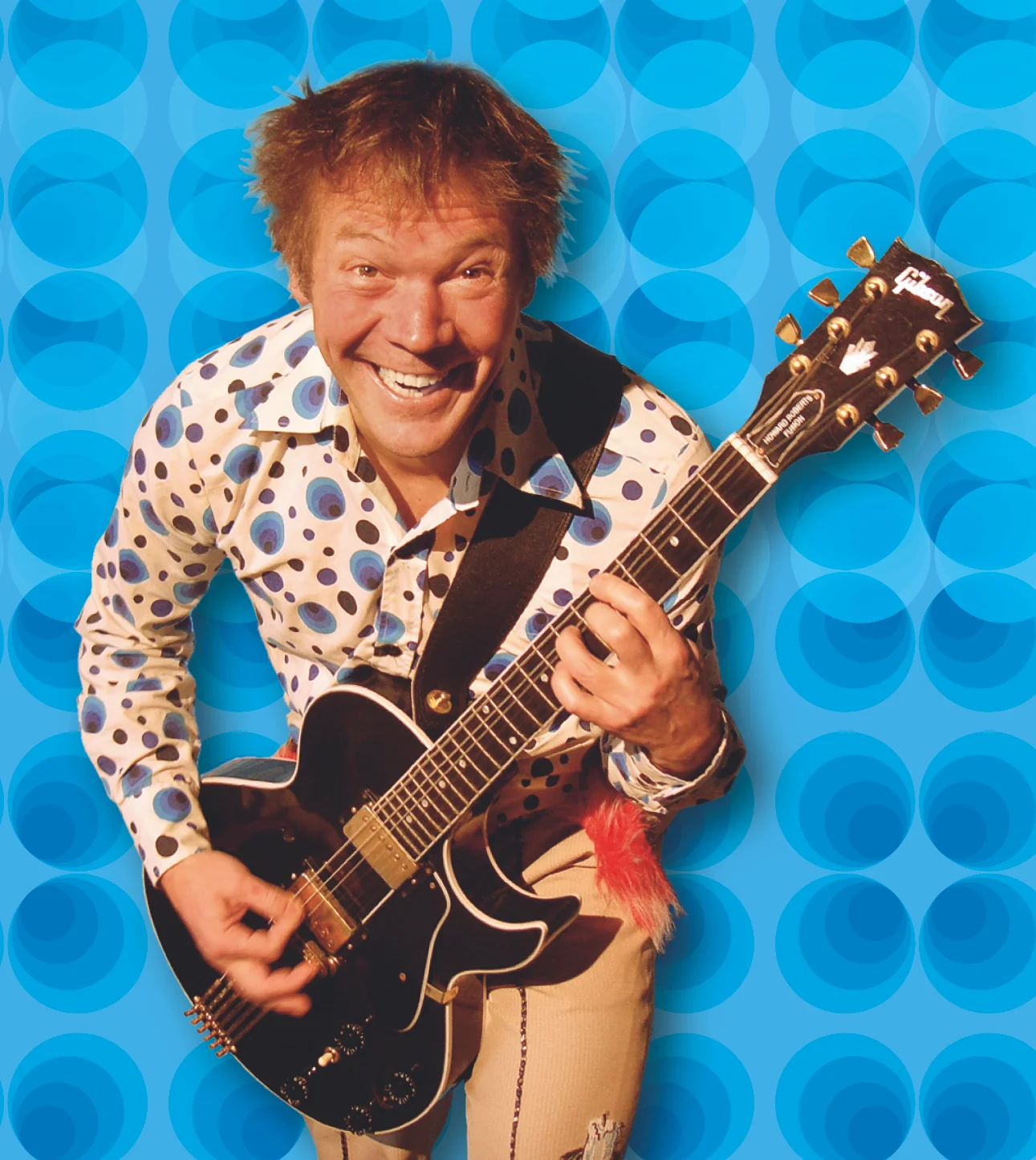
Image from Wikipedia
Image from Wikipedia
Geraldino – the Nuremberg children's songwriter with heart, humor, and stage energy
An artist who understands children's music as true stage art
Geraldino, born Gerd Grashaußer, is one of the defining voices in German-speaking children's music. Since the early 1980s, he has represented a form of children's song that does not pander but takes seriously, entertains, and works at a high musical level. From a music history perspective, he is not a marginal phenomenon but a versatile stage artist who combines children's music with singer-songwriter tradition, theater, performance, and educational intent.
His artistic career is closely linked to Nuremberg, but his influence extends far beyond: Geraldino has been touring through Germany, Austria, and Switzerland for decades, organizing concerts, festivals, workshops, and media formats for children and families. A remarkable blend of compositional joy, live presence, and cultural commitment shines through, making him a staple in the children's music scene.
Biography: From Gerd Grashaußer to the stage name Geraldino
Gerd Grashaußer was born in 1959 and developed an early relationship with music. On his own biography page, he documents the journey from accordion lessons in childhood to his first musical performances and subsequent professionalization as a children's songwriter. This early anchoring in practical music-making forms an important part of his artistic identity, as Geraldino's work thrives on direct engagement, craftsmanship, and a distinctive sense of closeness to the stage.
From 1983, he specialized in "modern children's music" and performed from then on under the stage name Geraldino. Between 1988 and 1991, he underwent training in rhythmics with Professor Hannelore Krause-Wichert in Cologne, a detail that further underscores his musical competence. It is precisely this connection of musical education, performative experience, and pedagogical practice that shapes his profile to this day.
The artistic breakthrough: Children's music as an independent scene
Geraldino's career developed not in the shadow of adult music but in an independent cultural niche that he actively helped shape. As early as the early 1990s, the "Geraldino Fan Club" was founded; a fan club newsletter and a fan club MC also emerged. This illustrates how early a loyal following formed around his music and how consistently he has combined live experience with community thinking.
A central moment was the co-founding of "kindermusik.de" in 1998. This association of children's songwriters was not just a network, but also a cultural-political signal: children's music became visible, connected, and brought to the stage as a scene. By doing so, Geraldino positioned himself as an initiator, organizer, and idea provider, not merely as a singer or author.
Nuremberg as an artistic center and laboratory
Nuremberg is more than just a place of residence or work for Geraldino. The city became a productive center of his music career, where he developed festivals, projects, and collaborations. Since 1999, the Geraldino Children's Music Festival has been held at the Nuremberg Tafelhalle, serving as both a showcase for the scene and a place of recognition. During the festival, the German Children's Song Award is presented, an idea that Geraldino himself initiated to strengthen the status of children's songs.
This work has cultural relevance beyond the individual event. The festival brings artists together each year, publishes festival CDs, and supports a children's charity with the proceeds. Through this, Geraldino connects musical production with social responsibility, an aspect that significantly enhances his authority as a leading figure in the scene.
Stage presence, formats, and musical development
Geraldino's live work is one of his most important characteristics. Sources describe him as a musician who performs over 100 concerts a year and appears with various line-ups. This high stage presence reflects a music career that is not limited to studio work but thrives on direct interaction with children, parents, and educators. It is particularly in children's concerts that his profile as a performer unfolds: narrative, spontaneous, playful, and at the same time precise in arrangement.
His musical development includes not only solo programs but also collaborations with bands, orchestras, and ensembles. Examples range from big band formats to projects with the Nuremberg Symphony Orchestra and even a musical crime story. By doing so, Geraldino consciously works on expanding the genre of children's music by continually rethinking sound colors, line-ups, and dramatic forms.
Discography: Extensive, versatile, and culturally significant
Geraldino's discography is remarkably extensive. A regional artist page mentions over 31 titles, in addition to numerous festival CDs and sampler contributions. This number alone indicates that it is not a casual children's song project but a developed oeuvre with considerable content and production breadth.
Among the mentioned releases are titles like Abenteuer Eisenbahn, Winterliederspaß, Sommerliederspaß, Hin und Weg, Der Ball ist bunt, Spaßeimer, Glühwürmchen, Party in der Kuckucksuhr, Ein Lied für Dich!, Ein Lied für mich, Lauf Rentier lauf, and Peter und der Wolf with the Nuremberg Symphony Orchestra. These titles showcase a musical language that thrives on everyday observations, imagination, seasons, movement, and children's perception. Geraldino relies on catchy compositions, clear imagery, and an understanding of arrangement that remains immediately accessible to children without losing artistic substance.
Style, Attitude, and Musical Signature
Geraldino's style is characterized by openness and crossover. An artist description highlights that he works as an actor, musician, filmmaker, visual artist, audiobook narrator, and author. It is this versatility that explains why his music operates not just through melodies but also through language, role changes, scenic moments, and visual imagination. His children's music is less a mere repertoire and more a living total artwork.
Content-wise, a clear attitude is evident. Geraldino works with educational themes, language promotion, social learning, and cultural participation. He produced music clips for children, led workshops for educational professionals, and was present in children's radio formats. This gives his artistic development a second layer: he is not just an entertainer but also a mediator between music, education, and social practice.
Critical Reception and Cultural-Political Significance
Geraldino is described in music press and regional cultural contexts as someone who has not only played children's music but has also structured and helped build it. The neue musikzeitung portrays him as "a guy who always wants more," which aligns well with his tireless project work. The metropolitan region of Nuremberg describes him as an artist with many facets and emphasizes his role as a vocation, not merely as a professional musician.
Awards such as the Cultural Promotion Award from the City of Nuremberg, the Paula Maurer Prize, and the Schwabach Cultural Meter mark the public recognition of his work. Additionally, the German Children's Song Award, which he initiated, should permanently strengthen the relevance of the genre. In a cultural-historical perspective, Geraldino thus stands for a form of children's song that combines quality, scene-building, and artistic dignity.
Current Projects, Anniversaries, and New Contexts
Even in recent times, Geraldino remains active. In 2023, he celebrated his 40th stage anniversary at the Nürnberg Bardentreffen along with his Plomster band. In the same year, he was involved in performances and workshops for several weeks at the 20th anniversary of the Frankfurt Children's Songwriters Festival with colleagues. This demonstrates a music career that does not dwell in nostalgia but continues to engage with the vibrant scene.
In 2024, his musical crime story Ein Fall für Paule Paulson was performed with the string orchestra Ventuno. Such projects illustrate his willingness to blur the boundaries between song, narrative, and orchestral dramaturgy. For an audience that often underestimates children's music, Geraldino serves as a compelling counterexample: musically intelligent, playful, and ambitious at the same time.
Cultural Influence: A Builder of the Children's Music Scene
Geraldino's influence extends far beyond individual songs. He has built festivals, co-founded networks, initiated awards, and made children's songs visible as a cultural field. His work in cooperation with broadcasting institutions, music schools, theaters, organizations, and artists demonstrates the breadth of his impact. In his view, children's music is not treated as a marginal genre but as a serious art form with its own aesthetics and social function.
This is precisely where his significance lies: Geraldino embodies the connection of stage presence, musical development, and cultural responsibility. His songs, programs, and festivals create spaces where children not only listen to music but experience it. Those who want to understand how modern children's music operates at a professional level will find particularly convincing access in Geraldino's work.
Conclusion: Why Geraldino Remains Exciting Today
Geraldino is exciting because he combines children's music with artistic ambition, humor, and organizational energy. His music career shows perseverance, diversity, and a clear attitude towards the importance of children's songs. Those who experience him live encounter an artist who takes his audience seriously, unleashes imagination, and understands the stage as a real meeting place.
This blend makes him a lasting presence in the German-speaking music landscape. Geraldino stands for vibrant children's music, cultural participation, and a stage art that connects generations. A live experience with him is worthwhile for families, music lovers, and all those who wish to discover how rich children's songs can sound.
Official Channels of Geraldino:
- Instagram: no official profile found
- Facebook: no official profile found
- YouTube: no official profile found
- Spotify: no official profile found
- TikTok: no official profile found
Sources:
- Geraldino Kindermusik – Official Website
- Geraldino Kindermusik – Fun Biography
- Wikipedia – Geraldino (Children's Songwriter)
- neue musikzeitung – Portrait of Geraldino
- Metropolregion Nürnberg – Artist Portrait Geraldino
- Weinturm Open Air – Geraldino
- Weinturm Open Air – Geraldino and the Plomster
- Deutscher Kinderliederpreis – Official Project Page
- Wikipedia: Image and Text Source