
Hugo Harrer
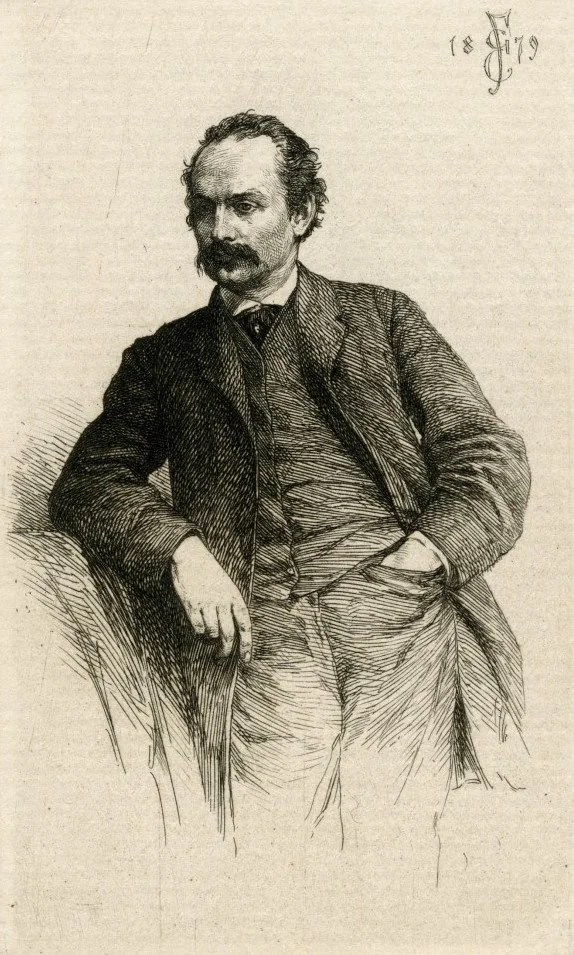
Image from Wikipedia
Image from Wikipedia
Hugo Harrer – Landscape and Architecture Through the Eyes of the Modern Realist
A German Painter Between Nature Observation, Architecture, and the Düsseldorf School
Hugo Paul Harrer (*February 6, 1836 in Eberswalde; † December 10, 1876 in Rome) is among those 19th-century artists whose work places the quiet power of precise observation at the forefront. As a German landscape and architectural painter of the Düsseldorf School, he combined nature study, a sense of form, and craftsmanship into a visual language that is simultaneously sober and poetic. His biography reveals an artist who found his path not through a classic academic career but through self-study and the studio environment of his friends. (de.wikipedia.org)
Early Years and Artistic Influence
Sources about Hugo Harrer begin with a youth marked by geographic and biographical uncertainties. While the Wikipedia text cites Eberswalde as his birthplace, the German Biography mentions Hirschberg in Silesia; both narratives underscore how fragmentary the documentation can sometimes be. However, one thing is certain: Harrer was born in 1836 and grew up in a century where painting was reorganizing itself between academic tradition, realistic perception of nature, and new ways of seeing. (de.wikipedia.org)
Noteworthy is his original plan to become an architect. This detour explains much about his later art, as his works combine spatial clarity, constructive thinking, and an alert eye for structures. Instead of a prolonged education at an art academy, Harrer chose an independent path: self-study, careful observation of nature, and working in the studios of friends shaped his development. (de.wikipedia.org)
From Architectural Interest to Painting
The transition from architecture to painting for Harrer was not a rupture but an expansion of vision. His artistic development illustrates a painter who understood lines, volumes, and space not only as means of representation but as the foundation of image construction. It is in the connection of landscape and architecture that his particular sensitivity to order, perspective, and atmospheric effect likely flourished. (de.wikipedia.org)
The German Biography explicitly describes Harrer as a "modern realist," who was always eager to depict things as he saw them. This characterization is central to the categorization of his painting, as it places him in an artistic conception that does not idealize but observes, clarifies, and makes visible. The accuracy of representation for such an artist does not merely become a technique, but an expression of an attitude toward reality. (deutsche-biographie.de)
The Düsseldorf School and Its Influence
Harrer is associated with the Düsseldorf School, a significant movement in 19th-century German painting, characterized primarily by careful composition, atmospheric landscapes, and a strong interest in narrative image arrangement. In this environment, nature study and artistic construction did not contradict but complemented each other. For Harrer, this meant a form of painting where observation and design remained interconnected. (de.wikipedia.org)
His landscapes and architectural views can thus be read as works in which the visible is arranged with discipline and sensitivity. The closeness to reality emphasized by the sources points to an artist who creates atmosphere not through pathos but through accuracy. This attitude lends his art a quiet, almost contemplative character that was increasingly appreciated in the 19th century. (deutsche-biographie.de)
Working Method, Style, and Artistic Signature
According to historical records, Harrer worked without a lasting commitment to a master studio and without formal academic training. This lack forms the profile of an independent artist who educated his vision himself and developed his visual language from observation. His artistic signature was shaped less by academic formulas than by precise perception of nature, architectural discipline, and realistic clarity. (deutsche-biographie.de)
Importantly for understanding his style is that landscape and architectural painting in the 19th century often mutually influenced each other. Buildings, perspectives, paths, horizons, and vegetation in such works do not merely serve as backdrop but create an ordered visual world. Harrer's work stands in this very tradition: The gaze seeks not spectacle but the credible structure of space. (de.wikipedia.org)
Rome, Final Chapter of Life, and Legacy
Hugo Harrer died in 1876 in Rome and was buried in the Protestant Cemetery in Rome. Rome was, for many artists in the 19th century, a place of concentration, exchange, and encounter with European art history; Harrer's end of life in this city fits with an artist who navigated between German painting tradition and an international art environment. The grave in Rome also points to the mobility of artist biographies at that time, which reached far beyond regional borders. (de.wikipedia.org)
His current presence in art history is less derived from broad popular fame than from his grounding in a significant school and a clearly describable attitude toward painting. This very constellation makes Harrer interesting: he represents that solid, serious artistic production of the 19th century that does not rely on effect but on observation, a consciousness of form, and reliability. (deutsche-biographie.de)
Cultural Value and Art Historical Context
Hugo Harrer embodies a painting that reveals the 19th century not as an era of grand gestures but as a time of differentiation. His significance lies in the connection of realistic precision and landscape sensitivity, of architectural observation and compositional order. He belongs to the artists who refined the act of seeing and whose work is culturally historically convincing primarily through the quality of execution and stylistic attitude. (deutsche-biographie.de)
For today’s art lovers, Harrer is fascinating because he represents a quieter, yet by no means less impressive side of German painting. His images invite viewers to look more closely: at space, light, structure, and atmosphere. Those interested in the Düsseldorf School, landscape painting, and the path of modern realism will discover in Hugo Harrer an artist of remarkable consistency. (deutsche-biographie.de)
Conclusion: Why Hugo Harrer Remains Relevant Today
Hugo Harrer remains intriguing because his biography shows an independent, disciplined path to art and because his painting relies more on observation than on effects. His work embodies precision, spatial thinking, and a quiet, convincing form of realism. Anyone who is passionate about 19th-century art should certainly become acquainted with Harrer in the context of the Düsseldorf School. (deutsche-biographie.de)
Official Channels of Hugo Harrer:
- Instagram: No official profile found
- Facebook: No official profile found
- YouTube: No official profile found
- Spotify: No official profile found
- TikTok: No official profile found