
Josef Engelhart
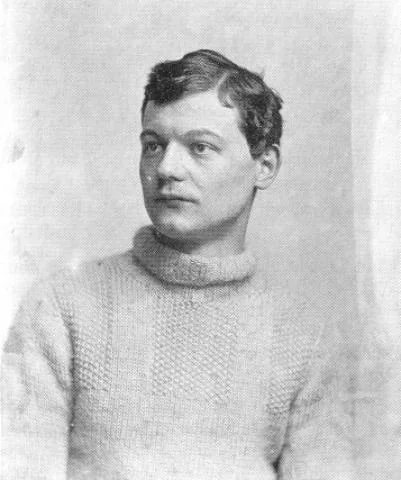
Image from Wikipedia
Image from Wikipedia
Josef Engelhart – Viennese Modernism between Urban Perspective and Secession Spirit
An artist who shaped Vienna around 1900
Josef Anton Engelhart, born on August 19, 1864, in Vienna and died there in 1941, is one of the key figures of the Viennese art scene around 1900. He worked as a painter, sculptor, and illustrator and was a co-founder of the Vienna Secession, a movement that opposed rigid academic conventions and provided crucial impulses for modernism in Vienna. His biography is closely linked to the cultural dynamics of the Danube metropolis, where he not only observed but also actively shaped the scene. ([de.wikipedia.org](https://de.wikipedia.org/wiki/Josef_Engelhart?utm_source=openai))
Early years and artistic education
Engelhart grew up in Vienna-Erdberg and received his academic education in Munich, where Gabriel von Hackl, Johann Caspar Herterich, and Ludwig Löfftz were among his teachers. These years shaped his perception of composition, drawing, and figurative precision, while later travels familiarized him with new currents in European art. The combination of academic training and open observation of contemporary life became a hallmark of his artistic development. ([de.wikipedia.org](https://de.wikipedia.org/wiki/Josef_Engelhart?utm_source=openai))
After returning to Vienna in 1887, Engelhart established connections with writers and artists, joined the Hagengesellschaft, and was admitted to the Association of Visual Artists of Vienna in 1888. Even in this phase, it was evident that he was not just a quiet craftsman of images, but an active participant in the cultural life of his city. A trip to Paris in 1891/92 brought him directly into contact with the latest artistic currents and international exhibition practices. ([de.wikipedia.org](https://de.wikipedia.org/wiki/Josef_Engelhart?utm_source=openai))
The Vienna Secession and the Breakthrough to Modernism
Engelhart was one of the original members of the Vienna Secession, founded in 1897, which symbolized the break with the conservative art establishment. Within this movement, he took on a visible role; according to Belvedere, he was president of the Secession from 1899 to 1900 and again from 1910 to 1911. Thus, he was not on the fringes of renewal but at the organizational center of one of the most important chapters in Austrian art history. ([wikiart.org](https://www.wikiart.org/store/artist/josef-engelhart.html?utm_source=openai))
The Secession's breakthrough did not mean for Engelhart an escape from the present but rather a sharpening of his gaze upon it. In sources, he appears as an artist who captured urban everyday life, social roles, and the urban milieu with particular acuity. His work thus combines historical significance with an almost journalistic proximity to the contemporary, setting a unique tone within Viennese modernism. ([wikiart.org](https://www.wikiart.org/store/artist/josef-engelhart.html?utm_source=openai))
Motif World: Street, Types, Society
Engelhart became particularly known for his depictions of Viennese street life. WikiArt describes him as the "King of the Street" and emphasizes his vivid studies of figures caught between everyday life, politics, and social observation; Belvedere simultaneously refers to his painting "Pülcher" from 1888 as a striking example of his attention to marginalized groups and urban environments. This imagery makes his art exciting even today, as it remains readable not only aesthetically but also socio-historically. ([wikiart.org](https://www.wikiart.org/store/artist/josef-engelhart.html?utm_source=openai))
Engelhart did not capture the city in grand monumental artworks but in scenes of fleeting glimpses: street types, everyday situations, characterful faces, and social transitions. It is from this that his work derives a blend of observational sharpness and atmospheric presence, which is crucial for a strong artistic signature. His paintings do not narrate Vienna as a backdrop, but rather as a vibrant resonance space of an entire era. ([wikiart.org](https://www.wikiart.org/store/artist/josef-engelhart.html?utm_source=openai))
Style, Technique, and Artistic Development
Engelhart's style navigated between realistic observation, modern looseness, and specific decorative echoes. He worked not only as a painter but also as a sculptor and illustrator, giving his entire oeuvre a wide formal range. In art history, he is often described as a versatile chronicler who mastered both pictorial precision and the atmosphere of the moment. ([wikiart.org](https://www.wikiart.org/store/artist/josef-engelhart.html?utm_source=openai))
Belvedere emphasizes that Engelhart handled both banal and everyday subjects with the same expertise as socially charged motifs. A central value of his artistic development lies precisely in this: he made the inconspicuous life visible without romanticizing it. His art thus appears approachable, observational, and at the same time carefully composed. ([belvedere.at](https://www.belvedere.at/lebensnah?utm_source=openai))
International Impressions and Artistic Network
Engelhart's path led him not only through Vienna and Munich but also to Paris, where he engaged with new currents and exhibited works in the Société Nationale des Beaux-Arts. Additionally, trips to Spain and further impressions from Europe broadened his horizons and sharpened his position between tradition and modernity. This international openness is a crucial key to his significance in the context of Viennese modernism. ([de.wikipedia.org](https://de.wikipedia.org/wiki/Josef_Engelhart?utm_source=openai))
His network included writers, art colleagues, and figures from cultural life. Such connections are not merely biographical footnotes but part of his artistic profile: Engelhart was deeply integrated into a dense web of debates, exhibitions, and institutional upheavals. This entrenchment makes him an authority in the Viennese art scene around 1900. ([de.wikipedia.org](https://de.wikipedia.org/wiki/Josef_Engelhart?utm_source=openai))
Awards, Recognition, and Historical Context
Sources mention, among other things, the awarding of the Knight's Cross of the Franz Joseph Order. However, even more important than individual honors is his role as a contributor to an artistic new beginning that made Vienna internationally visible. In retrospect, Engelhart represents that type of artist who not only creates works but also influences cultural infrastructure and aesthetic debates. ([de.wikipedia.org](https://de.wikipedia.org/wiki/Josef_Engelhart?utm_source=openai))
During World War I, Engelhart set up a reserve hospital for wounded soldiers in his home and enlisted as a war painter. These episodes point to a biography that remained closely tied to the political and social upheavals of its time. Therefore, his art is not only part of Viennese modernism, but also a testament to an era when art and history intersected inseparably. ([de.wikipedia.org](https://de.wikipedia.org/wiki/Josef_Engelhart?utm_source=openai))
Discography in the true sense? A clarification of the artist's profile
Since Josef Engelhart was a painter and sculptor, there is no musical discography in the strict sense. However, for an art-historical artist profile, his chronicle of works remains crucial: early academic works, Secession participation, cityscapes, portraits, and sculptures form the foundation of his oeuvre. His "hit list" does not lie in charts but in the enduring impact of an entire artistic era. ([de.wikipedia.org](https://de.wikipedia.org/wiki/Josef_Engelhart?utm_source=openai))
Those who wish to understand Engelhart must read him as a chronicler of Viennese life: as an artist who translated urban types, social roles, and the transformations of modernity into striking imagery. This blend of observation, stylistic awareness, and institutional relevance makes him attractive to art lovers to this day. His works show the close connection between artistic development and cultural change. ([wikiart.org](https://www.wikiart.org/store/artist/josef-engelhart.html?utm_source=openai))
Conclusion: Why Josef Engelhart remains fascinating to this day
Josef Engelhart remains captivating because he did not merely depict Vienna around 1900 but also shaped it as a thoughtful artist. He connected modern sensibility with social awareness, institutional responsibility with individual signature, making the city itself a motif of a vivid visual language. Anyone seeking to understand Viennese modernism will find in his work a key of particular clarity and permanence. ([wikiart.org](https://www.wikiart.org/store/artist/josef-engelhart.html?utm_source=openai))
His art invites closer examination: of faces, milieus, roles, and the subtle tensions between everyday life and art. This enduring strength lies in his ability to distill metropolitan life into images of high presence. Those interested in the Vienna Secession, realism, and the narrative power of historical art should certainly discover Engelhart. ([wikiart.org](https://www.wikiart.org/store/artist/josef-engelhart.html?utm_source=openai))
Official Channels of Josef Engelhart:
- Instagram: No official profile found
- Facebook: No official profile found
- YouTube: No official profile found
- Spotify: No official profile found
- TikTok: No official profile found