
Katharina von Bora
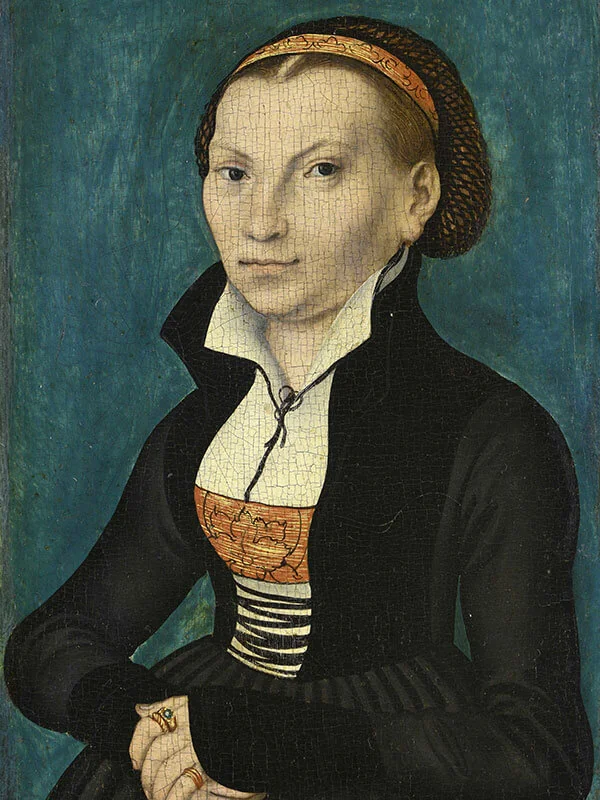
Image from Wikipedia
Image from Wikipedia
Katharina von Bora: The Wise Woman Behind the Reformation
An Exceptional Biography between Monastery, Departure, and Historical Impact
Katharina von Bora, after her marriage Katharina Luther, is considered one of the most fascinating female figures of the Reformation period. Born on January 29, 1499, in Lippendorf and died on December 20, 1552, in Torgau, she was not known as a political actor in today's sense, but as a Saxon noblewoman, Cistercian nun, and the wife of Martin Luther. It is precisely in this connection that her historical significance lies: she became a prominent figure of a profound upheaval that redefined religion, everyday life, and society in the 16th century. ([de.wikipedia.org](https://de.wikipedia.org/wiki/Katharina_von_Bora?utm_source=openai))
Early Years in Nobility and the Path to the Monastery
The early life of Katharina is closely tied to the upheavals of her time. As the daughter of impoverished nobility, she was initially sent to a convent school and later to the Marienthron convent in Nimbschen near Grimma after her mother's early death. There, she took her vows in 1515 and initially lived according to the rules of monastic life, which combined education, discipline, and religious commitment. ([heiligenlexikon.de](https://www.heiligenlexikon.de/BiographienK/Katharina_von_Bora.htm?utm_source=openai))
These years in the monastery form the starting point of an extraordinary biography, as they already reveal the tension between religious tradition and reformative dynamism. Katharina was not a marginal figure, but part of that generation of women whose life paths were reshaped by church and political upheavals. Her later role was not the result of public self-promotion, but of a historical constellation that placed her at the center of Reformation history. ([heiligenlexikon.de](https://www.heiligenlexikon.de/BiographienK/Katharina_von_Bora.htm?utm_source=openai))
Escape from the Monastery and the Encounter with the Reformation
In 1523, Katharina von Bora escaped from the monastery along with several nuns. This escape symbolically represents the radical break that the Reformation meant for spiritual life forms. The women made their way to Wittenberg, where they met Martin Luther, whose thoughts and presence were already profoundly shaping the religious landscape of the Empire. ([geschichte.sachsen.de](https://www.geschichte.sachsen.de/katharina-von-bora-5514.html?utm_source=openai))
The encounter with Luther marked a turning point in her life. Two years later, Katharina and the reformer married in Wittenberg. This marriage was not only significant on a personal level but also a publicly perceived signal against the Catholic ideal of celibacy for clergy. The union of a former monk and a former nun became one of the most well-known models of marriage during the Reformation. ([worldhistory.org](https://www.worldhistory.org/Katharina_von_Bora/?utm_source=openai))
Wittenberg, Household, and Economic Responsibility
After their marriage, Katharina Luther developed a distinct profile in the everyday life of the Wittenberg Luther economy. She organized the household, utilized the brewing rights granted by the monastery, raised livestock, and leased several properties. Thus, she became the central manager of a large household that provided for not only the immediate family but also guests, students, and other residents. ([luther.de](https://www.luther.de/themen/bora0.html?utm_source=openai))
Here, her historical significance becomes particularly clear: Katharina took on tasks that today could be described as organizational, economic, and social leadership. At a time when women's spheres of action were often limited, she emerged as a dynamic and competent household leader who relieved the reformer of everyday burdens. Sources emphasize that through this role, she became a stabilizing factor for the Luther household. ([luther.de](https://www.luther.de/themen/bora0.html?utm_source=openai))
However, the economic burdens of her later life were also significant. After Luther's death, Katharina faced financial hardship due to the costs of reconstruction. This circumstance illustrates how closely personal biography and the material consequences of political-religious upheavals were intertwined. Thus, Katharina von Bora remained not just a symbol, but a woman who directly experienced the hardships of her time. ([de.wikipedia.org](https://de.wikipedia.org/wiki/Katharina_von_Bora?utm_source=openai))
The Role as “Lutherin” and Her Cultural Legacy
After her marriage, Katharina was also referred to as "the Lutherin." This nickname refers to the strong public perception that her persona gained in the context of the Reformation. She stood at the intersection of religious renewal, family life, and public memory, thus becoming a figure around whom interest in the social aspect of the Reformation continues to converge today. ([en.wikipedia.org](https://en.wikipedia.org/wiki/Katharina_von_Bora?utm_source=openai))
The cultural impact of Katharina extends far beyond the historical episode of marriage. In modern depictions, she appears as a self-confident, supportive, and pragmatic figure who adds a tangible human dimension to the myth of the Reformation. The research and popular representations reveal that her life story is consistently retold, whether in historical biographies, exhibitions, or film adaptations. ([ekkw.de](https://www.ekkw.de/fileadmin/suchrelevant/service/bereiche/medienzentrale/Dokumente/Medienliste_Frauenbiografien.pdf?utm_source=openai))
Reception in History, Research, and Popular Culture
The legacy of Katharina von Bora is closely connected to the historiography of the Reformation. German biographies, Saxon history portals, and ecclesiastical historical presentations depict her as a woman of independence, industriousness, and organizational skill. Her role in the Luther household, where she was not merely a companion but a shaping force of a new Protestant lifestyle, is particularly emphasized. ([deutsche-biographie.de](https://www.deutsche-biographie.de/gnd118575430.html?language=en&utm_source=openai))
She also remains present in visual and media culture. References to a 2003 film about Luther and other media representations indicate that Katharina von Bora continues to be perceived as a significant historical figure. Her presence in such formats illustrates how strongly her biography is linked to the collective image of the Reformation. ([de.wikipedia.org](https://de.wikipedia.org/wiki/Katharina_von_Bora?utm_source=openai))
Discography and Musical Classification
There is no verified discography for Katharina von Bora, no hit singles, album releases, or chart history. She was not a musician but a historical personality of the 16th century. Therefore, searching for a "discography" will yield no musical catalog, but rather a life rooted in historiography, not in the music industry. ([de.wikipedia.org](https://de.wikipedia.org/wiki/Katharina_von_Bora?utm_source=openai))
This very contrast makes the research clear: The preserved sources deal with her origins, monastic period, escape, marriage, household, and economic situation, but not with artistic publications. Placing her in music genres, production, or musical development would be factually incorrect. Thus, this section remains intentionally formulated as historical classification and not as an invented discography. ([heiligenlexikon.de](https://www.heiligenlexikon.de/BiographienK/Katharina_von_Bora.htm?utm_source=openai))
Current Projects and Releases
There are no documented current music projects or new releases from the years 2024 and 2025 for Katharina von Bora. As a historical figure of the 16th century, she stands outside contemporary release cycles, tours, or collaborations. The secured sources instead provide ongoing historical reception, but no new artistic productions in the modern sense. ([de.wikipedia.org](https://de.wikipedia.org/wiki/Katharina_von_Bora?utm_source=openai))
Conclusion: Why Katharina von Bora Continues to Fascinate
Katharina von Bora fascinates because she was much more than the wife of a famous reformer. She represents self-assertion, organizational strength, and the often-overlooked power of everyday life in history. Her life story connects monastery, escape, marriage, economic responsibility, and cultural memory into a portrait of unusual density. ([heiligenlexikon.de](https://www.heiligenlexikon.de/BiographienK/Katharina_von_Bora.htm?utm_source=openai))
Those who study the Reformation period encounter in her a woman whose impact is subtle yet enduring. It is precisely in this lies her dynamism: she embodies not the loud pathos of history, but its sustaining structure. A visit to historical sites associated with Katharina von Bora opens the view on a personality who not only accompanied the upheaval of her time but shaped it. ([geschichte.sachsen.de](https://www.geschichte.sachsen.de/katharina-von-bora-5514.html?utm_source=openai))
Official Channels of Katharina von Bora:
- Instagram: no official profile found
- Facebook: no official profile found
- YouTube: no official profile found
- Spotify: no official profile found
- TikTok: no official profile found