
Katharina von Bora
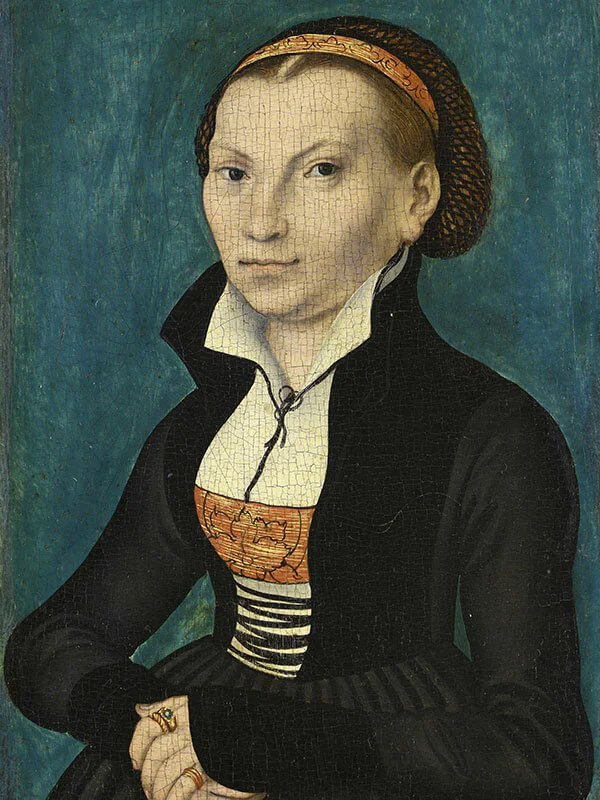
Image from Wikipedia
Image from Wikipedia
Katharina von Bora – the Strong Voice of the Reformation and One of the Defining Women of the 16th Century
A Biography Between Monastery, Upheaval, and Historical Significance
Katharina von Bora, later known as Katharina Luther, is one of the most impressive female figures of the Reformation era. Born on January 29, 1499, in Lippendorf and died on December 20, 1552, in Torgau, she was a Saxon noblewoman and Cistercian nun whose life path is closely connected to the historical upheaval of the 16th century. As the wife of Martin Luther, she became known far beyond her origins and has gone down in history as "the Lutherin." ([de.wikipedia.org](https://de.wikipedia.org/wiki/Katharina_von_Bora?utm_source=openai))
Her life does not recount the story of a musician, but of a woman who created her own space for action amidst religious, social, and economic turmoil. It is precisely for this reason that her biography feels remarkably modern today: she represents self-assertion, practical organizational talent, and a clear view of the realities of her time. Historical accounts consistently emphasize that her contributions cannot be reduced to the role of wife, but are an integral part of the Reformation history itself. ([geschichte.sachsen.de](https://www.geschichte.sachsen.de/katharina-von-bora-5514.html?utm_source=openai))
Early Years in the Monastery and the Break with the Old Order
Katharina von Bora entered monastic life at an early age and became a Cistercian nun. Her youth fell during a time when Europe's religious order was under pressure and new ideas gained influence. Her departure from the monastery marked not only a personal but also a historical turning point, as it led her directly into the heart of the Reformation movement. ([de.wikipedia.org](https://de.wikipedia.org/wiki/Katharina_von_Bora?utm_source=openai))
Tradition describes her escape from the monastery as part of the dramatic upheavals associated with Luther's work. In Wittenberg, she connected with the reformative environment that permanently changed her life. This development made her a figure who appears not only as a companion in historical biographies but also as an active witness of a revolution. ([geschichte.sachsen.de](https://www.geschichte.sachsen.de/katharina-von-bora-5514.html?utm_source=openai))
The Marriage to Martin Luther as a Turning Point in Reformation History
At the age of 26, Katharina von Bora married the reformer Martin Luther. This union became one of the most famous marriages in European history, influencing not only her own life but also the public image of the Reformation. The marriage changed her social standing, living conditions, and historical resonance. ([de.wikipedia.org](https://de.wikipedia.org/wiki/Katharina_von_Bora?utm_source=openai))
In Reformation history, Katharina von Bora was not a marginal figure but a visible co-creator of a new Protestant lifestyle. Sources emphasize that she organized the household, took on economic responsibilities, and established a stable foundation for life in Wittenberg through agricultural and domestic tasks. It was precisely this practical competence that made her a key figure in the familial and social daily life surrounding Luther. ([luther.de](https://www.luther.de/themen/bora0.html?utm_source=openai))
Household, Economy, and Everyday Life: Katharina as Organizer
Historical records highlight that Katharina von Bora utilized the brewing rights associated with the monastery, engaged in livestock farming, and leased several properties. This showcases her as a woman who not only managed daily life but actively supported the economic existence of the Luther household. Her actions illustrate how closely intertwined household, economy, and social status were in the early modern period. ([luther.de](https://www.luther.de/themen/bora0.html?utm_source=openai))
Family history also played a central role. Between 1526 and 1534, Katharina von Bora gave birth to several children; records mention Johannes, Elisabeth, Magdalena, Martin, Paul, and Margarethe. This family dimension amplified her historical presence because it made the Protestant parsonage visible as a new model of life. ([lutherin.de](https://www.lutherin.de/stationen.html?utm_source=openai))
Wittenberg as the Center of a New Protestant Lifestyle
In Wittenberg, Katharina von Bora developed into a woman whose influence extended far beyond her immediate family. The Luther house became a place of exchange where students, guests, and visitors would come and go. Her role as the hostess provided structure to the reformed daily life and turned the house into a vibrant center of the Reformation. ([luther.de](https://www.luther.de/themen/bora0.html?utm_source=openai))
The historical perspective on her has significantly changed over time. While older depictions often treated her primarily as Luther's wife, newer biographical and cultural historical writings emphasize her independence. Her significance lies precisely in that she not only accompanied the Protestant lifestyle but concretely embodied it in everyday life. ([worldhistory.org](https://www.worldhistory.org/Katharina_von_Bora/?utm_source=openai))
Later Years, Economic Hardship, and the End in Torgau
After Luther's death, Katharina von Bora fell into economic difficulties. Records describe how she faced financial burdens from reconstruction and had to secure her livelihood, among other things, by taking in boarders. These later years depict a woman who, despite all her historical significance, struggled with very real existential problems. ([deutsche-biographie.de](https://www.deutsche-biographie.de/gnd118575430.html?language=en&utm_source=openai))
Her death in Torgau on December 20, 1552, marks the end of a life closely tied to the upheavals of the Reformation. However, the historical memory of her continues well beyond this date, as she is repeatedly revisited in biographies, museums, theological representations, and cultural-historical studies. Thus, Katharina von Bora remains a key figure for understanding the Protestant age. ([de.wikipedia.org](https://de.wikipedia.org/wiki/Katharina_von_Bora?utm_source=openai))
Reception and Cultural Impact
The reception of Katharina von Bora ranges from scholarly biographies to church historical representations and cinematic and pop-cultural adaptations. She emerges as a historical figure whose life is laden with theological, social, and cultural-historical significance. It is precisely this complexity that explains why she remains a symbol of the Reformation to this day. ([deutsche-biographie.de](https://www.deutsche-biographie.de/gnd118575430.html?language=en&utm_source=openai))
Modern depictions also emphasize her presence as an independent woman in a male-dominated era. The interest in her life story reveals how strongly Katharina von Bora acts as a projection surface for questions of female self-determination, religious change, and social order. Her biography connects personal choice with historical significance. ([katharinavonboraopera.com](https://katharinavonboraopera.com/about-2/?utm_source=openai))
Conclusion: Why Katharina von Bora Continues to Fascinate Today
Katharina von Bora fascinates because she did not merely stand beside a great reformer but shaped the Reformation in everyday life. Her life story connects monastery, flight, marriage, family, economy, and historical self-assertion into an extraordinarily multi-layered portrait. Anyone seeking to understand the history of the Reformation cannot overlook her. ([luther.de](https://www.luther.de/themen/bora0.html?utm_source=openai))
It is precisely in her blend of personal strength and historical impact that her lasting brilliance lies. Katharina von Bora remains a captivating figure in European history, whose life invites new perspectives on role, influence, and identity in the early modern period. ([worldhistory.org](https://www.worldhistory.org/Katharina_von_Bora/?utm_source=openai))
Official Channels of Katharina von Bora:
- Instagram: No official profile found
- Facebook: No official profile found
- YouTube: No official profile found
- Spotify: No official profile found
- TikTok: No official profile found