
Kerstin Müller
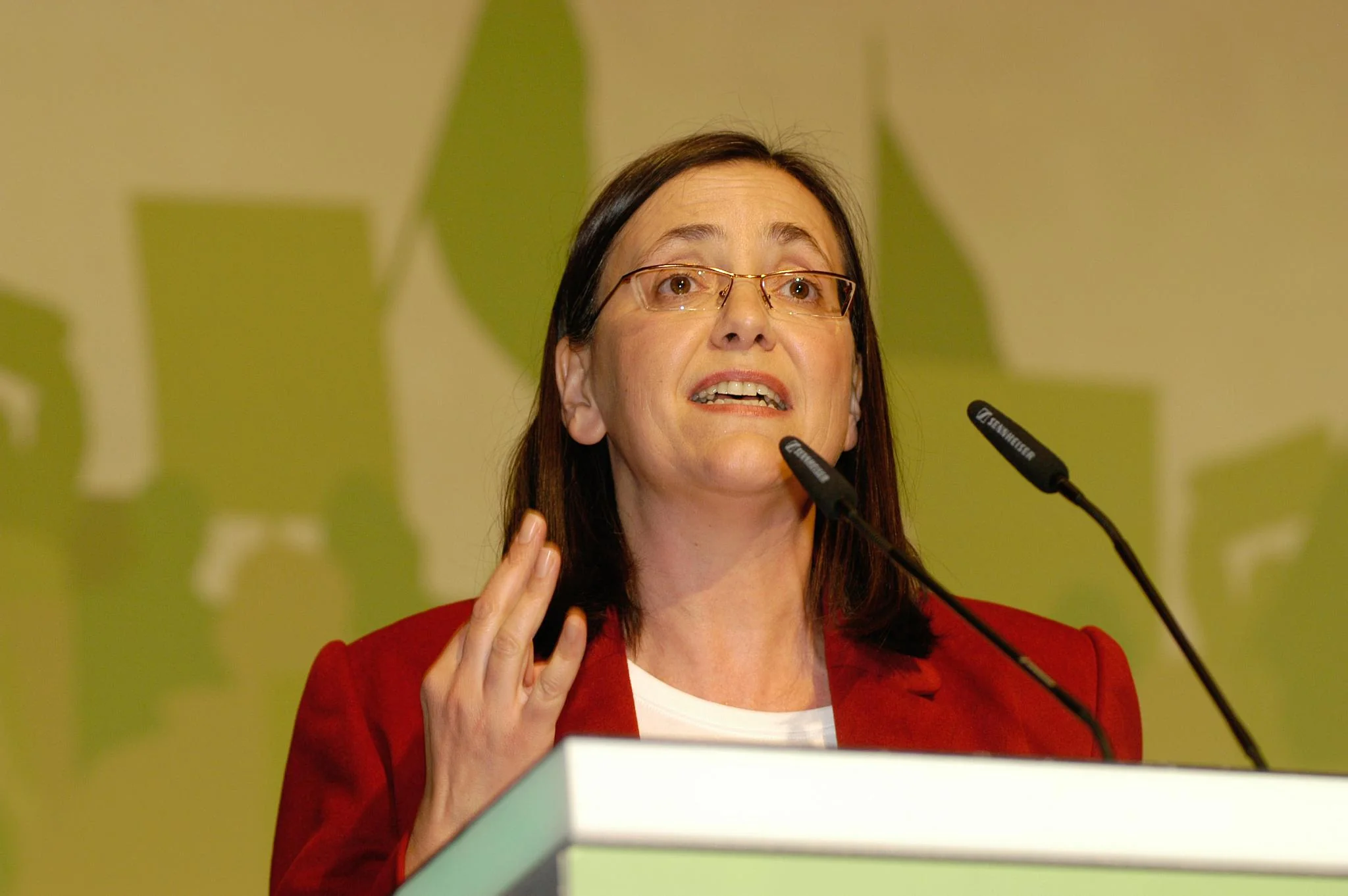
Image from Wikipedia
Image from Wikipedia
Kerstin Müller: A Defining Voice of German Green Politics
Between Bundestag, Foreign Policy, and Political Responsibility
Kerstin Müller, born on November 13, 1963, in Siegen, is one of the defining figures of German politics in the 1990s and early 2000s. She became known as a politician of Bündnis 90/Die Grünen and took on key roles in the parliamentary group and government during a politically turbulent phase. A musical career, discography, or artistic publications are not documented for this individual in verified sources. ([de.wikipedia.org](https://de.wikipedia.org/wiki/Kerstin_M%C3%BCller?utm_source=openai))
Early Years and Political Entry
Kerstin Müller's political journey began in North Rhine-Westphalia, leading her early into the ranks of the Greens. The sources describe her as a woman politicized by the women's movement who joined the party in 1986. In the years that followed, she took on responsibilities in the Cologne district board and worked her way into political practice with clear thematic focuses. ([munzinger.de](https://www.munzinger.de/register/portrait/biographien/Kerstin%20M%C3%BCller/00/21335?utm_source=openai))
Her early positions particularly focused on domestic and legal policy. These included migration policy, reforms in citizenship law, asylum law, drug policy, women's rights issues, and social policy topics. This thematic breadth highlights a politician who cannot be reduced to a single debate but instead profiled herself in multiple areas of conflict. ([munzinger.de](https://www.munzinger.de/register/portrait/biographien/Kerstin%20M%C3%BCller/00/21335?utm_source=openai))
Rise in the Bundestag Faction
Between 1994 and 2002, Kerstin Müller served as the chairperson of the Bundestag faction of Bündnis 90/Die Grünen. This role made her one of the most visible voices of her party in parliament and gave her significant influence over parliamentary strategy. In this role, she combined organizational leadership with political profiling, becoming a central figure of the Green reform course of those years. ([de.wikipedia.org](https://de.wikipedia.org/wiki/Kerstin_M%C3%BCller?utm_source=openai))
The Bundestag faction was a site of intense debates around coalition politics, government capability, and social change during this phase. Kerstin Müller thus stood at the intersection of the party base, parliamentary work, and public perception. It was precisely this position that shaped her authority within the party and made her a politically experienced player. ([de.wikipedia.org](https://de.wikipedia.org/wiki/Kerstin_M%C3%BCller?utm_source=openai))
State Minister at the Foreign Office
From 2002 to 2005, Kerstin Müller served as State Minister at the Foreign Office. This transition took her from faction leadership to a government role, where she assumed foreign policy responsibilities in a particularly sensitive area. Sources emphasize that she engaged deeply with German-Israeli relations and the peace process in the Middle East. ([de.wikipedia.org](https://de.wikipedia.org/wiki/Kerstin_M%C3%BCller?utm_source=openai))
This phase solidified her reputation as an experienced foreign policy expert. In foreign policy, reliability, analytical sharpness, and diplomatic resilience are crucial, and it was in this context that Müller was able to develop political authority. Her work at the Foreign Office thus represents a career that spanned from intra-party engagement to international politics. ([de.wikipedia.org](https://de.wikipedia.org/wiki/Kerstin_M%C3%BCller?utm_source=openai))
Political Focus and Content Profile
A recurring theme in Müller's career is the connection between fundamental issues and concrete political practice. This is particularly evident in her commitment to anti-discrimination, women's rights, and a liberal migration and asylum policy. In 1992, she was a co-initiator of the anti-racism campaign "Farbe bekennen - Rassismus ächten," which underscores her profile as a determined fighter against exclusion. ([munzinger.de](https://www.munzinger.de/register/portrait/biographien/Kerstin%20M%C3%BCller/00/21335?utm_source=openai))
This content focus aligned with a Green policy that professionalized and institutionally solidified in the 1990s. Müller represents a political style in this context that combines parliamentary work with social responsibility. Her career demonstrates how programmatic conviction can translate into long-term political impact. ([munzinger.de](https://www.munzinger.de/register/portrait/biographien/Kerstin%20M%C3%BCller/00/21335?utm_source=openai))
After her Time in Government
After the end of her government role, Kerstin Müller remained politically and socially active. Since 2019, she has reportedly been working for the Deutsche Gesellschaft für Auswärtige Politik in Berlin. She is also a member of the board of Aktion Deutschland Hilft, the alliance of aid organizations. ([de.wikipedia.org](https://de.wikipedia.org/wiki/Kerstin_M%C3%BCller?utm_source=openai))
These stations demonstrate that her engagement did not end with her departure from the ministry. Rather, her sphere of influence shifted to analysis, consulting, and social responsibility. Thus, she remains a public figure whose biography spans multiple political and institutional levels. ([de.wikipedia.org](https://de.wikipedia.org/wiki/Kerstin_M%C3%BCller?utm_source=openai))
Public Perception and Positioning
The available sources paint a picture of an experienced foreign policy expert with a long parliamentary and party political practice. Her significance lies less in spectacular individual moments than in her consistent work on central political issues. This continuity makes her an interesting figure in the political history of the Greens. ([de.wikipedia.org](https://de.wikipedia.org/wiki/Kerstin_M%C3%BCller?utm_source=openai))
Those who look at Kerstin Müller see a politician who has taken on responsibility across multiple levels: party, faction, federal government, and civil society organizations. Her career exemplifies how political profile grows through thematic clarity and institutional experience. In the public perception, she remains a personality with substance and historical relevance. ([de.wikipedia.org](https://de.wikipedia.org/wiki/Kerstin_M%C3%BCller?utm_source=openai))
Discography, Music Style, and Artistic Development
For Kerstin Müller, there are no indications of a music career, musical releases, chart successes, or a discography in the verified sources. Similarly, a genre, stage style, or artistic development in the music journalistic sense is not verifiable. Therefore, any musical classification would be speculative and would fall outside the available source material. ([de.wikipedia.org](https://de.wikipedia.org/wiki/Kerstin_M%C3%BCller?utm_source=openai))
Instead, the available dataset shows a political biography with clear stations, mandates, and responsibilities. Those looking for a musical artist profile will not find a corresponding foundation here; however, those interested in German contemporary history and Green politics will receive a precise and solid profile. This transparency is central to trustworthy biographical work. ([de.wikipedia.org](https://de.wikipedia.org/wiki/Kerstin_M%C3%BCller?utm_source=openai))
Current Projects and Public Role
There are no verified information on current music projects, new albums, or artistic collaborations. The most recent verifiable references pertain more to her work at the Deutsche Gesellschaft für Auswärtige Politik and her engagement on the board of Aktion Deutschland Hilft. Thus, her public role remains firmly rooted in the political and civil society area. ([de.wikipedia.org](https://de.wikipedia.org/wiki/Kerstin_M%C3%BCller?utm_source=openai))
This continuity keeps her relevant for observers of German politics. Kerstin Müller represents a generation of Green politicians who have helped shape the transition from protest movements to governmental responsibility. Therefore, her biography is also a piece of party and government history. ([de.wikipedia.org](https://de.wikipedia.org/wiki/Kerstin_M%C3%BCller?utm_source=openai))
Conclusion: A Career with Political Weight
Kerstin Müller is not a musician but a prominent German politician with an exceptionally clear parliamentary and foreign policy career. What is exciting about her is the thematic consistency, institutional experience, and the role she played in an important phase of the Greens. Those interested in political biographies, government work, and the development of Bündnis 90/Die Grünen will find here a remarkable personality with significant historical value. ([de.wikipedia.org](https://de.wikipedia.org/wiki/Kerstin_M%C3%BCller?utm_source=openai))
Even though no live experience in the musical sense is enticing, engaging with her political history is very worthwhile. It illustrates how strongly political conviction, diplomatic responsibility, and societal engagement can shape a public career. This is where the lasting relevance of Kerstin Müller lies. ([de.wikipedia.org](https://de.wikipedia.org/wiki/Kerstin_M%C3%BCller?utm_source=openai))
Official Channels of Kerstin Müller:
- Instagram: no official profile found
- Facebook: no official profile found
- YouTube: no official profile found
- Spotify: no official profile found
- TikTok: no official profile found
Sources:
- Wikipedia - Kerstin Müller
- Wikipedia - Kerstin Müller (Disambiguation)
- Munzinger - Kerstin Müller
- Wikipedia: Image and text source