
Peter Brandt (Historiker)
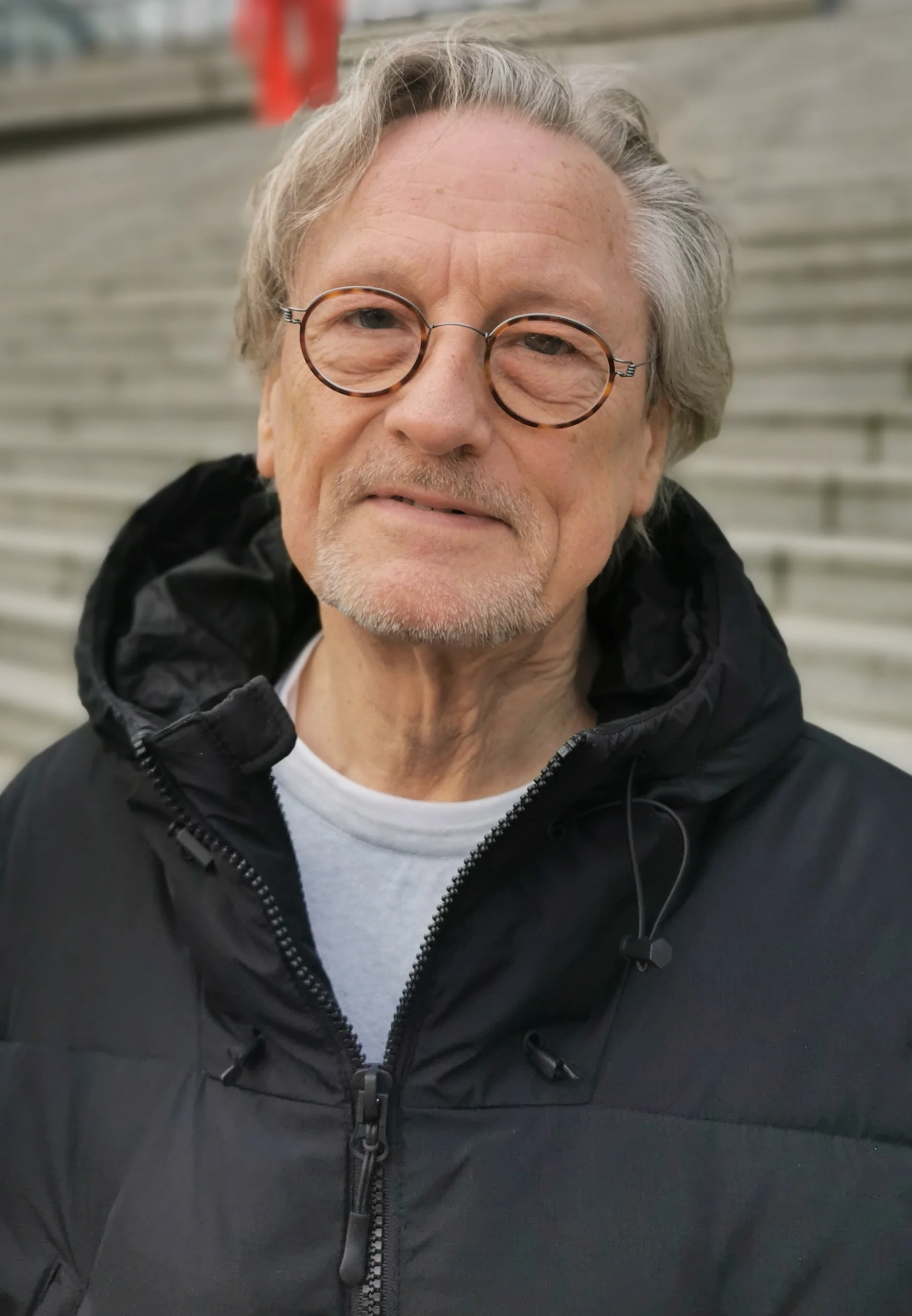
Image from Wikipedia
Image from Wikipedia
Peter Brandt: The Historian between Contemporary History, Republican Thinking, and Political Memory
A Life in the Shadow and the Light of German History
Peter Willy Brandt, born on October 4, 1948, in West Berlin, is one of the defining German historians of contemporary history. As a retired professor for Modern and Contemporary History at the FernUniversität in Hagen, he combined scientific analysis, political journalism, and public historical communication into a distinctive intellectual voice. His biography is closely intertwined with the history of German division and unification, while also being clearly oriented towards his own research, teaching, and historical judgment. ([de.wikipedia.org](https://de.wikipedia.org/wiki/Peter_Brandt_%28Historiker%29?utm_source=openai))
Biographical Influence: Background, Studies, and Academic Path
Brandt grew up in a politically charged environment that greatly influenced his later interest in the history of democracy, the labor movement, and national issues. The FernUniversität in Hagen cites milestones in his career, including his doctorate in 1973 from the Free University of Berlin with a dissertation on the reconstruction of the German labor movement in 1945/46, focusing on Bremen, and his habilitation in 1988 at the Technical University of Berlin on the early history of student fraternities in connection with the emergence of the German national movement in the early 19th century. These stages mark the transition from a political experiential space to systematic historical research. ([fernuni-hagen.de](https://www.fernuni-hagen.de/dtiev/team/peter.brandt.shtml?utm_source=openai))
From 1989 to 2014, Brandt taught as a professor of Modern German and European History at the FernUniversität in Hagen; from 2003 to 2017, he also directed the Dimitris Tsatsos Institute for European Constitutional Sciences there, now serving as Honorary Director. His institutional ties in Hagen underscore his long-term impact as a researcher, educator, and mediator between historiography, constitutional history, and political theory. ([fernuni-hagen.de](https://www.fernuni-hagen.de/stz/karlsruhe/transfer/gespraeche-am-tor/gespraeche_am_tor_20220601.shtml?utm_source=openai))
Research Focus: Labor Movement, Constitutional History, and the German Question
Brandt's scholarly profile focuses on comparative European constitutional history, the history of Northern Europe, nation-building and national movements, as well as Prussia, the German question, and the history of the labor movement and socialism. His publication list shows that he does not consider major historical themes in isolation, but rather develops them within social, political, and intellectual historical contexts. This is where the particular authority of his works lies: they connect structural-historical perspectives with a focus on political conflicts, institutions, and cultures of memory. ([fernuni-hagen.de](https://www.fernuni-hagen.de/dtiev/team/peter.brandt.shtml?utm_source=openai))
Brandt has also been present in public historical communication for decades. The FernUniversität highlights his involvement in historical readers, anniversary publications, exhibitions, and lectures at educational institutions, trade unions, and political parties. His approach aimed not at academic isolation but at the serious popularization of historical insights. ([de.wikipedia.org](https://de.wikipedia.org/wiki/Peter_Brandt_%28Historiker%29?utm_source=openai))
Important Publications and Scholarly Signature
Brandt's central books include Antifascism and the Labor Movement: Structure, Manifestation, Politics in Bremen 1945/46 (1976), the source and reader volume 1918/19: A Reader (1979), the document collection The Left and the National Question: Documents on German Unity (1981), and the volume Prussia: On the Social History of a State (1981). These titles depict a historian who not only evaluates sources but also integrates them into larger political narratives. ([fernuni-hagen.de](https://www.fernuni-hagen.de/dtiev/team/peter.brandt.shtml?utm_source=openai))
Additionally, the multi-volume Handbook of European Constitutional History in the 19th Century, which Brandt co-edited with Werner Daum, Martin Kirsch, and Arthur Schlegelmilch, holds particular significance. This project attests to his status as an authority in constitutional history and as an organizer of scholarly cooperation across national boundaries. Furthermore, he continuously published historically and politically oriented articles in Neue Gesellschaft / Frankfurter Hefte, which further solidified his role as a public intellectual. ([fernuni-hagen.de](https://www.fernuni-hagen.de/dtiev/team/peter.brandt.shtml?utm_source=openai))
Career as a Historian: From Research to Political Journalism
Brandt's career is characterized by a rare combination of academic rigor and political diagnosis. The FernUniversität describes him as a historian who has engaged with the history of the Weimar Republic, parliamentarism, the labor movement, as well as Cuba and Italy. In lectures and discussion formats, he repeatedly addressed the New Eastern Policy, German division and reunification, and Prussia as a place of memory. ([fernuni-hagen.de](https://www.fernuni-hagen.de/stz/karlsruhe/transfer/gespraeche-am-tor/gespraeche_am_tor_20141126.shtml?utm_source=openai))
His influence thus extends beyond a classic university career. Brandt has become a historian who productively intertwines political experience, family history, and scholarly analysis. This combination of biographical access and empirical research lends his works a high degree of vividness and cultural relevance. ([fernuni-hagen.de](https://www.fernuni-hagen.de/geschichteundbiographie/luedenscheider_gespraeche/?utm_source=openai))
Current Projects and Later Publications
Even after the official end of his professorship, Brandt remained actively engaged in research. The FernUniversität mentions the volume Turning Points: Reform and Revolution 1917–1920/21 for 2018, stemming from the Friedrich Ebert Memorial Lecture. Additionally, he continues to be visible in newer teaching and research contexts at the FernUniversität, such as course units and projects on history and constitutional history. This indicates the ongoing relevance of his research to current historical debates. ([fernuni-hagen.de](https://www.fernuni-hagen.de/dtiev/team/peter.brandt.shtml?utm_source=openai))
Critical Reception and Historical Influence
Brandt's reception is closely tied to his role as a historian of the labor movement, the history of democracy, and the German question. His works are referenced in university contexts, conferences, and institutional publications as a reference for socio-historical and constitutional issues. His commitment to the scholarly examination of political upheavals makes him a defining figure in contemporary German historiography. ([de.wikipedia.org](https://de.wikipedia.org/wiki/Peter_Brandt_%28Historiker%29?utm_source=openai))
His influence is also evident in the way he structured historical debates, not just producing research findings. Whether discussing the labor movement after 1945, national protest cultures, or European constitutional development: Brandt stands for a historiography that does not idealize political experience but questions it analytically. This is precisely where the enduring strength of his scholarly profile lies. ([fernuni-hagen.de](https://www.fernuni-hagen.de/dtiev/team/peter.brandt.shtml?utm_source=openai))
Style, Attitude, and Cultural Significance
Peter Brandt's historical style combines overview, source knowledge, and political awareness. His works are not aimed at rapid theses, but rather at historical depth, conceptual precision, and the interconnection of institutions, movements, and ideas. This places him among those historians who view history not as a collection of data, but as a living conflict between order, change, and memory. ([fernuni-hagen.de](https://www.fernuni-hagen.de/dtiev/team/peter.brandt.shtml?utm_source=openai))
He remains culturally intriguing because he always thinks of German history as also part of European and social history. Those who read Brandt or follow his lectures encounter not merely a specialist, but a historically minded intellectual with clear language and political judgment. This amalgamation of scholarship, public engagement, and biographical experience renders him permanently relevant for history enthusiasts. ([fernuni-hagen.de](https://www.fernuni-hagen.de/stz/karlsruhe/transfer/gespraeche-am-tor/gespraeche_am_tor_20220601.shtml?utm_source=openai))
Conclusion: Why Peter Brandt Continues to Fascinate
Peter Brandt is a historian who brings together German contemporary history, constitutional history, and political memory with an extraordinarily clear scientific attitude. His career demonstrates how productive academic research can be when it combines source criticism, historical breadth, and public communication. Those interested in the history of the labor movement, the German question, or the democratic development of Europe will find in Brandt a knowledgeable and opinionated companion. His work remains engaging because it does not conclude history, but rather opens it for further thought. ([fernuni-hagen.de](https://www.fernuni-hagen.de/dtiev/team/peter.brandt.shtml?utm_source=openai))
A live experience in the classical sense is more common in his lectures, discussions, and academic formats than on a concert stage. It is precisely there that his particular presence is evident: calm, precise, and densely argumentative. Those who encounter Peter Brandt experience historiography as a lively interpretation of the present. ([fernuni-hagen.de](https://www.fernuni-hagen.de/stz/karlsruhe/transfer/gespraeche-am-tor/gespraeche_am_tor_20141126.shtml?utm_source=openai))
Official Channels of Peter Brandt:
- Instagram: No official profile found
- Facebook: No official profile found
- YouTube: No official profile found
- Spotify: No official profile found
- TikTok: No official profile found