
Charles Tournemire
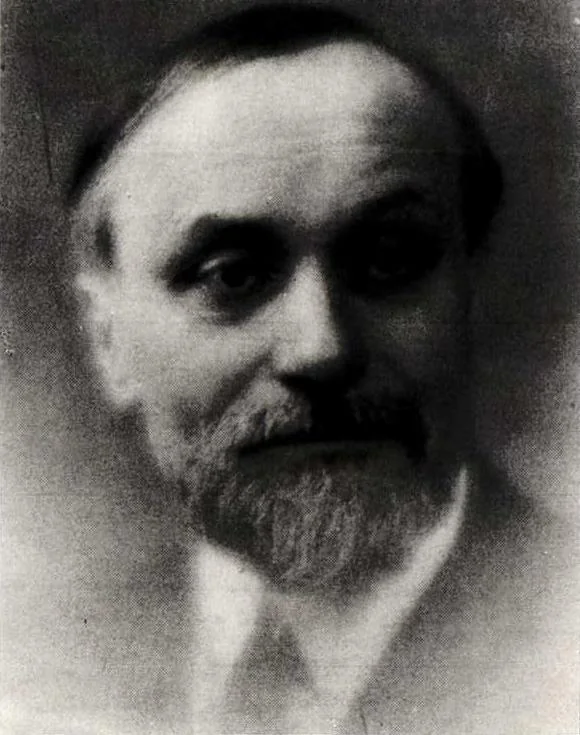
Image from Wikipedia
Image from Wikipedia
Charles Tournemire – The Mystical Organist between Gregorian Chant, Vision, and French Modernism
An Extraordinary Composer of the French Organ Era
Charles Arnaud Tournemire was a pivotal figure in the history of French organ and composition: born on January 22, 1870, in Bordeaux and died on November 4, 1939, in Arcachon, he combined liturgical depth with a distinctive musical language. As an organist, improviser, and composer, he stood in a tradition influenced by César Franck and Charles-Marie Widor, while simultaneously developing a deeply personal, spiritually charged musical idiom. His career took him early to the Parisian Basilica of Sainte-Clotilde, where he served for over four decades and established himself as a central figure in French church music life. ([fr.wikipedia.org](https://fr.wikipedia.org/wiki/Charles_Tournemire))
Biography: From Musical Talent in Bordeaux to the Parisian Organ Console
Tournemire grew up in Bordeaux and showed early promise that brought him close to the great French organ tradition. As the youngest pupil of César Franck, he received not only a solid compositional education but also an aesthetic influence that lent a particular seriousness to his later works. He also studied with Charles-Marie Widor, one of the most influential organists of his time, and took over the position of organist at Sainte-Clotilde in Paris in 1898 after Gabriel Pierné departed. He held this position until his death in 1939. ([fr.wikipedia.org](https://fr.wikipedia.org/wiki/Charles_Tournemire))
His work at Sainte-Clotilde was not just a professional stop, but the center of his artistic identity. There, he developed an organ stage presence based on improvisation, liturgical thinking, and colorful harmonies. In 1911, he received the Prix Chartier from the Académie des beaux-arts for his chamber music, highlighting that his compositional authority extended far beyond the organ repertoire. From 1919, he also taught music ensemble at the Paris Conservatory, influencing a younger generation as an educator. ([fr.wikipedia.org](https://fr.wikipedia.org/wiki/Charles_Tournemire))
Musical Development: Between Sacredness, Symbolism, and Modern Harmony
Tournemire's music operates at the intersection of Catholic liturgy, impressionistic color, and his unique, often visionary sound language. Particularly characteristic is his proximity to Gregorian chant, which he does not simply quote, but freely paraphrases and transforms into complex organ architecture. This principle reaches its peak in L’Orgue mystique: a cycle of 51 liturgical settings with 253 organ pieces, composed between 1927 and 1932, inspired by the liturgical calendar and the Gregorian repertoire. ([fr.wikipedia.org](https://fr.wikipedia.org/wiki/L%27Orgue_mystique))
The significance of this cycle lies not only in its scale but in its aesthetic stance. Tournemire merges modal shifts, dense harmonies, and improvisational freedom with a clear spiritual direction. Contemporaries such as Olivier Messiaen recognized the relevance and vitality of this music; in the history of reception, L’Orgue mystique is considered a key work of 20th-century French organ art. His improvised registrations and his technological affinity with the early recording format also made him one of the first organists whose improvisations were documented and later subjected to musicological analysis. ([fr.wikipedia.org](https://fr.wikipedia.org/wiki/L%27Orgue_mystique))
The Discography and the Profile of Works: Operas, Symphonies, Chamber Music, and Organ Works
Although Tournemire became known primarily as an organist, his oeuvre is much broader. The work overviews list eight symphonies, several operas, chamber music, vocal music, piano works, and an extensive organ corpus. The operas include Nittetis, Les Dieux sont morts, La Légende de Tristan, and Il Poverello di Assisi; in the symphonic realm, the works range from Symphonie Romantique to Symphonie du triomphe de la mort. This diversity demonstrates a composer who did not treat liturgical concentration and symphonic thought as contradictions. ([encyclopedia.com](https://www.encyclopedia.com/arts/dictionaries-thesauruses-pictures-and-press-releases/tournemire-charles-arnould))
Particularly impressive is his organ work outside of L’Orgue mystique. This includes early pieces like Andantino, Offertoire, and Pièce symphonique, as well as later works such as Fantaisie symphonique, Symphonie sacrée, and Fresques symphoniques sacrées. These titles reveal how much Tournemire thought in grand sonic arcs. His piano music, such as the Douze préludes-poèmes, engages in an exciting dialogue with Debussy, Ravel, and Scriabin, showing that his style was not confined to the sacred space. ([encyclopedia.com](https://www.encyclopedia.com/arts/dictionaries-thesauruses-pictures-and-press-releases/tournemire-charles-arnould))
Interpretation, Style, and Artistic Signature
Tournemire's stylistic signature blends religious devotion with intense sound dramaturgy. His harmonic language is often modal, floating, and imbued with polytonal or colorful chords, without ever losing touch with the liturgical core. Particularly, his organ works thrive on a special balance between formal rigor and free interpretation; this results in a sound picture that feels both archaic and modern. ([fr.wikipedia.org](https://fr.wikipedia.org/wiki/L%27Orgue_mystique))
His training with Franck and Widor is evident in the architecture of many works, yet Tournemire goes beyond that. He thinks in fields of tension between contemplation and ecstasy, communal experience and individual vision. For the history of French music, he is thus a pivotal figure: deeply rooted in the Catholic tradition, yet open to the harmonic innovations of the early 20th century. This blend explains why his music is still regarded in the organ world as demanding, serious, and spiritually charged. ([fr.wikipedia.org](https://fr.wikipedia.org/wiki/Charles_Tournemire))
Cultural Influence and Musical Impact
Tournemire's influence extends deeply into 20th-century French organ and church music. His students included notable names like Olivier Messiaen, Maurice Duruflé, and Jean Langlais, each of whom shaped sacred modernity in their own way. Thus, Tournemire became not only a composer of significant works but also a transmitter of an aesthetic that combines liturgical continuity with modern sound language. ([fr.wikipedia.org](https://fr.wikipedia.org/wiki/Charles_Tournemire))
His legacy is reflected both in research and in performance practice. Numerous studies, editions, and bibliographic works focus on his technique, his improvisational artistry, and his relationship with Gregorian chant. Particularly, L’Orgue mystique has become a reference point for organists who wish to explore the interplay between sacredness, formal consciousness, and sonic imagination. Reception in professional publications repeatedly highlights Tournemire as one of the essential voices of French organ culture. ([fr.wikipedia.org](https://fr.wikipedia.org/wiki/Charles_Tournemire))
Current Projects and Publications
As a historical artist, Charles Tournemire does not have any current projects, tours, or new releases in the contemporary sense. The present presence of his works primarily arises from new recordings, scholarly editions, organ recitals, and musicological publications that keep his oeuvre alive in concert and research practice. In the contemporary context, he remains present not as an active producer but as a permanently influential reference composer. ([fr.wikipedia.org](https://fr.wikipedia.org/wiki/Charles_Tournemire))
Conclusion: Why Charles Tournemire Still Fascinates Today
Charles Tournemire is intriguing because he not only preserved the French organ tradition but transformed it into a visionary sound language. His musical career connects master pupil, church musician, improviser, teacher, and composer into a rarely closed artistic profile. Those who listen to Tournemire encounter a musician who uniquely merges liturgy, form, and expression. Especially live at the organ, this music unfolds its full power – compelling, spiritual, and of great sonic authority. ([fr.wikipedia.org](https://fr.wikipedia.org/wiki/Charles_Tournemire))
Official Channels of Charles Tournemire:
- Instagram: No official profile found
- Facebook: No official profile found
- YouTube: No official profile found
- Spotify: No official profile found
- TikTok: No official profile found
Sources:
- Wikipedia – Charles Tournemire
- Wikipédia (fr) – Charles Tournemire
- Wikipédia (fr) – L’Orgue mystique
- Encyclopedia.com – Tournemire, Charles (Arnould)
- Oxford Academic – Improvisation as composition: the recorded organ improvisations of Vierne and Tournemire
- Classical Net – Basic Repertoire List: Tournemire
Upcoming Events
Erased Music: Roman Padlewski & Charles Tournemire
Enjoy forgotten masterpieces by Padlewski and Tournemire at the Jahrhunderthalle Bochum.
Erased Music: Roman Padlewski & Charles Tournemire
An evening full of sacred sound and history at the Jahrhunderthalle Bochum: Erased Music brings forgotten masters live to the stage in 2026. #Ruhrtriennale