
Heinrich Mann
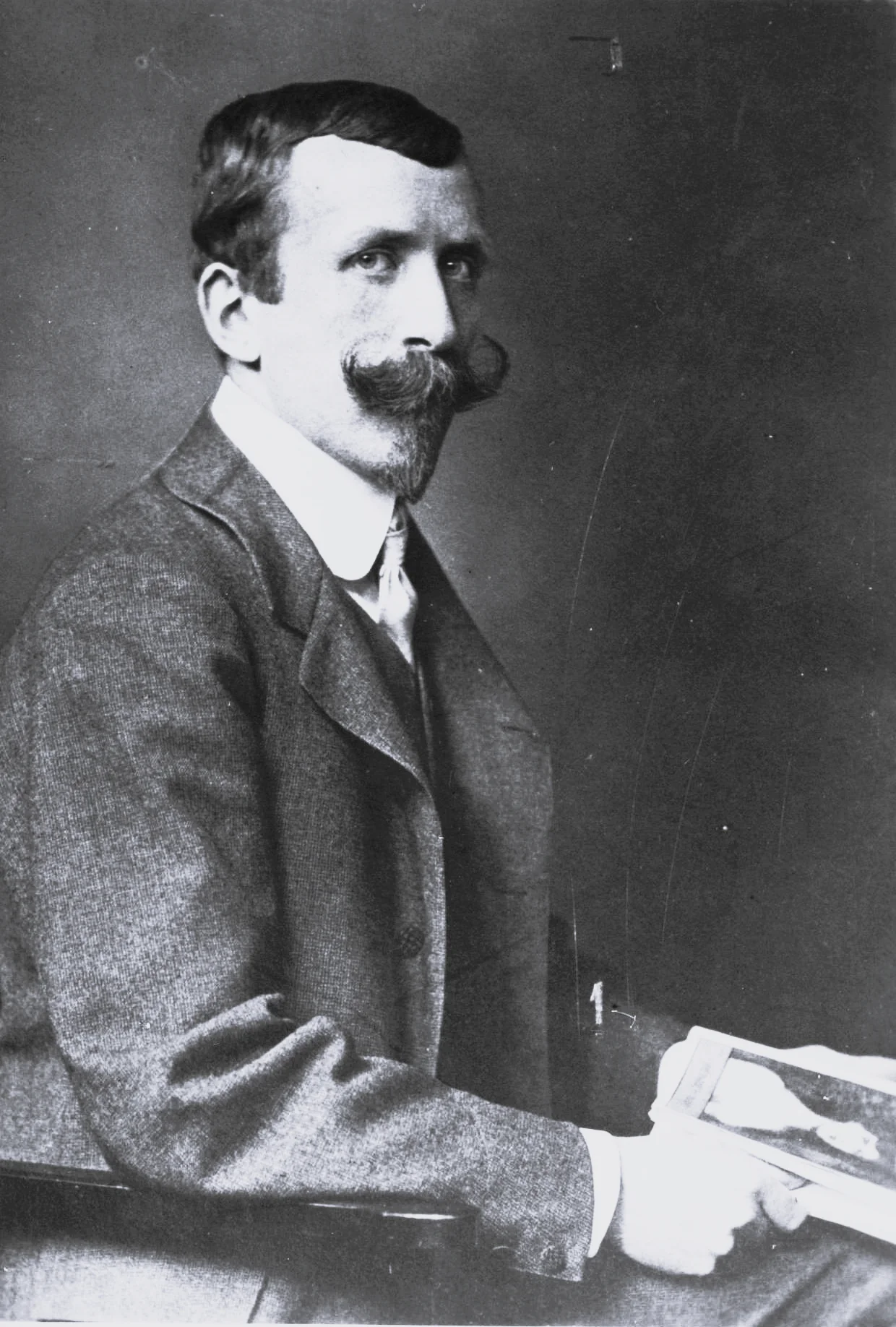
Image from Wikipedia
Image from Wikipedia
Heinrich Mann: The Great Social Critic of German Literature
A Writer Between Satire, Democracy, and Exile
Heinrich Mann is considered one of the most prominent voices in 20th-century German literature. Born on March 27, 1871, in Lübeck and dying on March 11, 1950, in Santa Monica, he early on evolved into an author who not only described society but dissected it with a sharp eye. As the older brother of Thomas Mann, he spent a long time in the shadow of an even more famous name, yet his own work possesses a distinctive power: politically charged, satirical, stylistically pointed, and marked by a clear republican stance. (dhm.de)
His literary career did not begin as a smooth ascent but rather as a series of breaks, new beginnings, and a conscious departure from the constraints of bourgeois expectations. After leaving high school prematurely and gaining experience in the book trade and publishing, Mann worked as a freelance writer starting in 1891, initially in Munich and later in Italy. Even early on, he combined aesthetic ambition with social analysis, making literature a place for political stance. (dhm.de)
Early Years and Literary Breakthrough
Heinrich Mann's early years were characterized by a hunger for education and restlessness. The son of a Lübeck merchant dropped out of school, gathered initial publishing experience, and ultimately chose writing as a way of life. His first novel, In einer Familie, was published in 1894 and already showcased his insight into moral tensions and inner conflicts that would characterize his later work. (dhm.de)
With Im Schlaraffenland (1900), Mann sharpened his profile as a satirist of bourgeois society. The novel undermines social conventions with biting irony and marks the transition from early aesthetics to clear social commentary. His readings of Nietzsche, Georg Brandes, Bourget, Taine, and French literature were crucial for his development and shaped a prose that oscillates between cultural criticism, irony, and political impulse. (dhm.de)
Professor Unrat and the Art of Satire
The real breakthrough came with Professor Unrat oder Das Ende eines Tyrannen from 1905. The novel later gained international recognition through Josef von Sternberg's film adaptation Der Blaue Engel, making Heinrich Mann a name outside the literary business as well. The work showcases his unmistakable approach: authoritarian figures, social hypocrisy, and the dismantling of petty-bourgeois morality in a precisely composed narrative form. (dhm.de)
Also, Die kleine Stadt and his early novels demonstrate his ability not merely to depict milieus but to condense them in symbolically charged scenes. Mann's prose works with sharp observation, witty dialogue, and a clear dramaturgy that makes his social-critical motives both readable and literarily demanding. This is precisely where his historical significance lies: he combined entertainment, polemics, and artistic intent into a distinctive form of narrative. (dhm.de)
The Empire Trilogy as Literary Accusation
With Der Untertan, Die Armen, and Der Kopf, Heinrich Mann created the so-called Empire Trilogy, analyzing Wilhelmine Germany as a system of subordination, opportunism, and authoritarian reflexes. Der Untertan is regarded as the most artistically convincing part and a central reckoning with the mentality of the Empire. Mann explicitly understood these novels as depictions of German society in the era of Wilhelm II. (dhm.de)
Literary-historically, this trilogy is of great relevance because it not only criticizes political grievances but translates the mechanics of power, career, and conformity into narrative form. Heinrich Mann's style remains sharp-edged: he loves satirical exaggeration, a revealing tone, and psychological precision that makes societal role masks visible. This connection between analysis and art gives his work relevance even today. (goethe.de)
Political Stance, Republic, and Resistance
Heinrich Mann was not a distant observer but an author with a clear democratic conviction. Early on, he opposed militarism and war enthusiasm, protested in 1915 with the essay Zola against the general war fervor, and firmly advocated for the republic and political responsibility. His famous formulations on democracy stem from the same spirit of an open, anti-authoritarian public. (dhm.de)
In 1931, he became president of the Poetry Section of the Prussian Academy of Arts. After the Nazis came to power, he was expelled from the Academy in 1933, and shortly thereafter, he lost his German citizenship. Heinrich Mann emigrated to France, later to the USA, where he wrote numerous anti-fascist texts, pamphlets, and journalistic works in exile. His life thus became an example of an intellectual who not only articulated his beliefs but defended them under political conditions. (dhm.de)
Exile Works and Historical Novel
In exile, Heinrich Mann reached another peak in his creative output. With the two-volume novel Die Jugend des Königs Henri Quatre and Die Vollendung des Königs Henri Quatre, he transferred political reflection into a historical form. The material concerning Henry IV connects humanism, power criticism, and state philosophical considerations with a wide narrative scope that ranks among his most mature achievements. (dhm.de)
These exile novels reveal another facet of the author: less direct satire and more epic thinking in historical contexts. Nevertheless, his approach remains distinctly Heinrich Mann: he seeks not the decor in history but the structure of power, compromise, and political morality. For this reason, his later work is regarded as key to understanding his entire literary project. (deutsche-biographie.de)
Style, Language, and Cultural Influence
Heinrich Mann's narrative art is influenced by the 19th-century French novel and is also strongly impacted by European cultural criticism. His early proximity to aestheticism and decadence transformed into literature of social responsibility. It is precisely this development that makes him a key figure bridging the Fin de Siècle, political novels, and engaged prose. (deutsche-biographie.de)
His influence extends far beyond individual titles. Professor Unrat was canonized through Der Blaue Engel, Der Untertan became a literary synonym for an authoritarian mentality, and his essays shaped the political thought of democratic literature. Heinrich Mann was often underestimated and spent a long time in the shadow of his brother, yet it is precisely his consistency in resistance and clarity in social criticism that secure him a firm place in literary memory today. (goethe.de)
Current Classification and Reception Today
There are naturally no current albums, singles, or music projects by Heinrich Mann; his cultural presence today arises through reissues, scholarly engagement, and the lasting relevance of his themes. The precise analysis of democracy, propaganda, abuse of power, and social hypocrisy in his work makes him an author who must still be read in the 21st century. His texts remain relevant because they do not merely document history but describe mechanisms that are still visible today. (dhm.de)
Those who read Heinrich Mann encounter an author of great analytical sharpness, strong political voice, and significant literary elegance. His novels and essays demonstrate how powerfully literature can work against authoritarianism, sham morality, and intellectual narrowness. Heinrich Mann remains fascinating because he merges world literature with social critique — and because his language continues to challenge us today. (goethe.de)
A visit to his works is always worthwhile: not as a historical obligation but as an encounter with an author who has uniquely linked thought, style, and stance. Heinrich Mann continues to live in the canon of German literature, and his texts resonate most where social order begins to waver. Anyone wishing to experience the literary power of the political novel cannot overlook him. (dhm.de)
Official Channels of Heinrich Mann:
- Instagram: No official profile found
- Facebook: No official profile found
- YouTube: No official profile found
- Spotify: No official profile found
- TikTok: No official profile found