
Ilma Rakusa
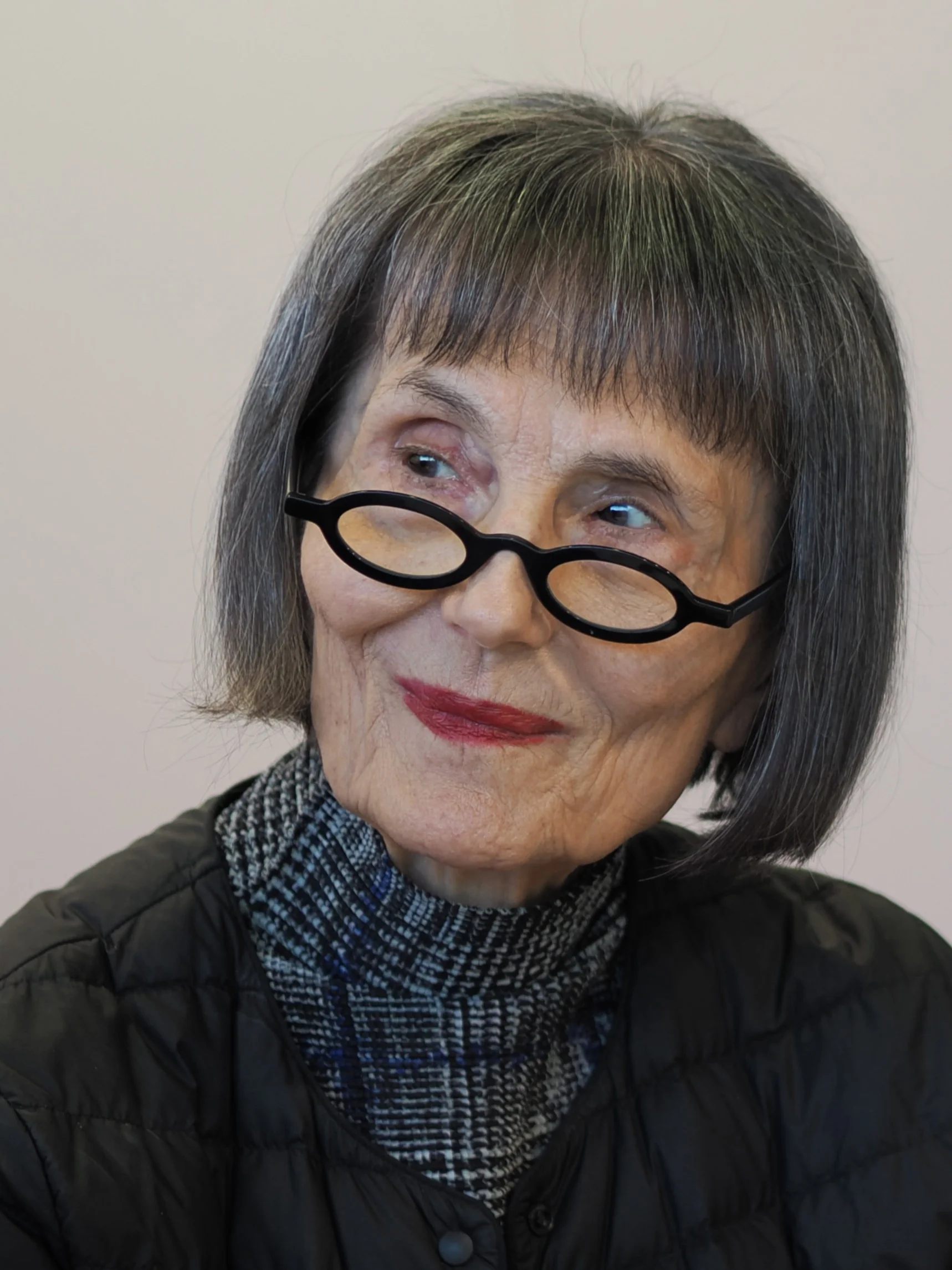
Image from Wikipedia
Image from Wikipedia
Ilma Rakusa: The Great Voice of European Literature Between Sound, Memory, and Precise Language
An author, translator, and literary scholar with a distinctive poetic signature
Ilma Rakusa is one of the most impressive literary voices in the German-speaking world. Born in 1946 in Rimavská Sobota and raised among Budapest, Ljubljana, Trieste, and later Zurich, she has crafted a unique artistic identity from multilingualism, migration, and intellectual mobility. Her work combines autobiographical condensation, cultural-historical breadth, and a linguistic artistry that critics repeatedly describe as musical, precise, and of great atmospheric density. ([ilmarakusa.info](https://www.ilmarakusa.info/IlmaRakusa_Biobibliografie.pdf))
Rakusa is not an author of loud gestures, but rather of finely calibrated perceptions. Her texts work with rhythm, sound, and the rhythmization of prose; even where she approaches essayistically or narratively, the sentence often remains in motion, open to nuances and internal shifts. It is precisely this literary mobility that makes her an exceptional figure: as a writer, translator, publicist, and literary scholar, she has built a European body of work over decades that thrives on experience, reflection, and stylistic mastery. ([ilmarakusa.info](https://www.ilmarakusa.info/IlmaRakusa_Biobibliografie.pdf))
Biography: Childhood Between Languages, Countries, and Cultural Transitions
Rakusa's early life story shapes her writing to this day. Childhood in Budapest, Ljubljana, and Trieste, followed by schooling in Zurich and studying Slavic and Romance studies in Zurich, Paris, and St. Petersburg, created that European depth of focus that permeates her work. She earned her doctorate in 1971 on the theme of solitude in Russian literature and began an academic career at the University of Zurich, where she initially worked as an assistant and later as a lecturer. Concurrently, she established herself as a freelance writer, translator, and publicist. ([ilmarakusa.info](https://www.ilmarakusa.info/IlmaRakusa_Biobibliografie.pdf))
This biographical multilingualism is not mere background noise but the core of her artistic development. Rakusa writes out of an awareness of transitions, losses, and cultural overlays. Her works exhibit a precise sensitivity to places where identity is not fixed but continually reshaped through remembering, translating, and observing. This is a significant part of her authority: she does not conceive of literature as an isolated artistic product but as a living form of European experience. ([tagesspiegel.de](https://www.tagesspiegel.de/kultur/das-polyglotte-unterwegskind-3809587.html))
Career and Breakthrough: From Scholarship to Literary Authority
Her path to literary public life has been continuous yet expansive. Since the 1970s, Rakusa has worked at the intersection of scholarship, feuilleton, and her own literary production. The early publication of her poetry collection Wie Winter in 1977 marked an important beginning; soon followed by stories, essays, poetry lectures, and literary miniatures that sharpened her profile as a stylistically highly concentrated author. ([ilmarakusa.info](https://www.ilmarakusa.info/IlmaRakusa_Biobibliografie.pdf))
By the later books, her position as a central European intellectual became evident. Titles such as Mehr Meer, Aufgerissene Blicke, Mein Alphabet, and Kein Tag ohne demonstrate how consistently Rakusa intertwines autobiographical memory, political awareness, and poetic condensation. Critics particularly praise her elegance, precision, and ability to translate European history into the smallest linguistic movements. ([tagesspiegel.de](https://www.tagesspiegel.de/kultur/das-polyglotte-unterwegskind-3809587.html))
Work and Discography in a Metaphorical Sense: A Literary Oeuvre with Clear Stages
Although Ilma Rakusa is not a musician, her work possesses an almost discographic logic: it unfolds in clear stages, each developing its own tone, arrangement, and formal tension. Early volumes include Wie Winter (1977), Die Insel (1982), Miramar (1986), Steppe (1990), and Les mots/morts (1992). These titles already illustrate the spectrum between poetry, narrative, and linguistic boundary crossing. ([ilmarakusa.info](https://www.ilmarakusa.info/IlmaRakusa_Biobibliografie.pdf))
In the 1990s and 2000s, Rakusa expanded her spectrum to include poetics and essays. Farbband und Randfigur (1994) and Langsamer! (2005) are among those books in which she reflects on language, perception, and contemporary experience without losing the aesthetic thread. Additionally, Von Ketzern und Klassikern (2003), Stille. Zeit. (2005), and Durch Schnee (2006) solidify her reputation as an author of dense, cultivated, and internationally relevant prose. ([ilmarakusa.info](https://www.ilmarakusa.info/IlmaRakusa_Biobibliografie.pdf))
Her later books show remarkable maturity. Mehr Meer explores memory as a movable archive, Aufgerissene Blicke sketches a Berlin journal with precise observation, Impressum: Langsames Licht collects lyrical miniatures, and Kein Tag ohne responds to a politically tumultuous present. This later work reveals an author who is not exhausted but rather, with each volume, becomes clearer, more concentrated, and more present. ([buero-indiebook.de](https://www.buero-indiebook.de/wp-content/uploads/literaturverlagdroschl_2022-2.pdf))
Style and Artistic Development: Musicality of Language Instead of Attention-Seeking
Rakusa's style is characterized by musicality, precision, and a pronounced sense of internal rhythm. Critical appreciations highlight that her slender sentence structures, focus on sound, and subtle parataxis recall musical forms. Her prose and poetry arise not from abundance but from condensation; every word matters, and every shift counts. ([fu-berlin.de](https://www.fu-berlin.de/campusleben/campus/2019/191122-ilma-rakusa-kleist-preis/index.html?utm_source=openai))
This poetic control connects with a strong thematic core: memory, solitude, multilingualism, European topographies, and the experience of history in individual biographies. Rakusa writes about places that disappear, about languages that overlap, and about the fragile relationship between home and being on the move. Her work gains strength precisely where it captures the fleeting without smoothing it over. ([tagesspiegel.de](https://www.tagesspiegel.de/kultur/das-polyglotte-unterwegskind-3809587.html))
Critical Reception and Cultural Influence
Rakusa has received numerous awards, including the Hieronymus Ring of the German Translators Association, the Petrarca Translator Award, the Adelbert von Chamisso Prize, the Swiss Literature Prize, the Berlin Literature Prize, and the Kleist Prize. These accolades not only highlight the literary quality of her work but also its cultural relevance in the German-speaking and European context. ([ilmarakusa.info](https://www.ilmarakusa.info/IlmaRakusa_Biobibliografie.pdf))
Her influence as a mediator between literatures is particularly strong. Her translations from Russian, Serbo-Croatian, and French, as well as her essayistic approaches to authors like Marina Tsvetaeva or Danilo Kiš, have shaped the perception of Eastern European and Francophone literature in the German-speaking world. Rakusa represents a culture of translation as an intellectual practice: open, precise, and internationally minded. ([akademie-solitude.de](https://www.akademie-solitude.de/de/person/ilma-rakusa-2/))
Current Projects and Recent Presence
Even in recent years, Rakusa remains literarily present. Kein Tag ohne was published in 2022 and described as a particularly personal and political book that translates the time of the pandemic, the war against Ukraine, and other global political upheavals into lyrical form. Thus, she once again demonstrates that literary precision and contemporary relevance are not opposing forces. ([buero-indiebook.de](https://www.buero-indiebook.de/wp-content/uploads/literaturverlagdroschl_2022-2.pdf))
The official website was updated in 2026, showing that Rakusa's work continues to be maintained, documented, and made publicly accessible. This underscores her ongoing relevance as an author whose texts are not only historically significant in literature but can still be read with remarkable freshness today. ([ilmarakusa.info](https://www.ilmarakusa.info/html/impressum.html))
Conclusion: Why Ilma Rakusa Continues to Fascinate
Ilma Rakusa fascinates because she brings together European experience, linguistic sensitivity, and an intellectual stance in a form that is both personal and universal. Her books are not loud statements but finely crafted works of art full of rhythm, memory, and intellectual depth. Those who appreciate literature as a resonant space of biography, history, and language will find in her an author of exceptional sovereignty. ([tagesspiegel.de](https://www.tagesspiegel.de/kultur/das-polyglotte-unterwegskind-3809587.html))
Especially live, in readings and discussions, this voice unfolds with particular intensity. Rakusa's presence thrives on concentration, clarity, and trust in the power of the precise word. Anyone who wishes to understand the European literature of the late 20th and early 21st centuries should not only read Ilma Rakusa but also experience her in public appearances. ([deutschlandfunk.de](https://www.deutschlandfunk.de/ilma-rakusa-mein-alphabet-das-eigene-leben-von-a-z-100.html?utm_source=openai))
Official Channels of Ilma Rakusa:
- Instagram: No official profile found
- Facebook: No official profile found
- YouTube: No official profile found
- Spotify: No official profile found
- TikTok: No official profile found