
Josef Winkler (Autor)
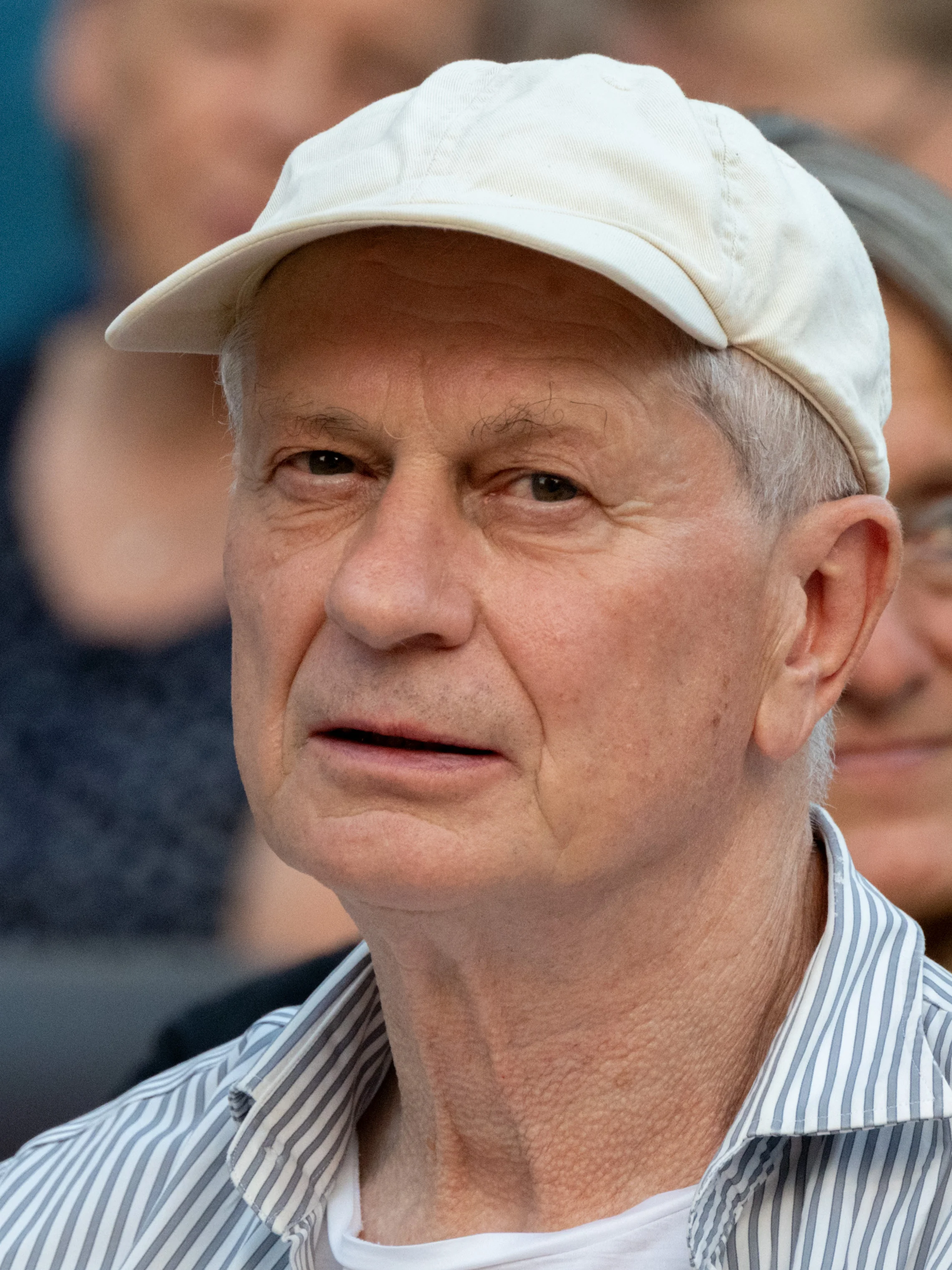
Image from Wikipedia
Image from Wikipedia
Josef Winkler – The Radical Narrator from Carinthia
An Author Who Pushes Language to Its Limits
Josef Winkler, whose real name is Joseph Winkler, was born on March 3, 1953, in Kamering near Paternion in Carinthia and is considered one of the most distinctive voices in contemporary Austrian literature. His work revolves around themes of origin, religion, violence, death, and the constrictions of rural environments, which he dissects literarily with great consistency. From an early age, he developed a unique poetic style that is often described as litany-like, rhythmic, and uncompromising in its intensity. ([de.wikipedia.org](https://de.wikipedia.org/wiki/Josef_Winkler_%28Autor%29?utm_source=openai))
Biographical Influences: Carinthia as a Literary Resonance Space
Winkler grew up in a rural Catholic environment that has profoundly influenced his writing. The experience of authority, religious discipline, and village control forms the emotional and thematic foundation of many of his books. His texts reveal how strongly origin can influence artistic development when it leads not to folklore but to existential literature. ([de.wikipedia.org](https://de.wikipedia.org/wiki/Josef_Winkler_%28Autor%29?utm_source=openai))
Sources indicate that Winkler was attracted early on to language as a form of rescue and resistance. His literary career emerged from a commitment to precise observation and a radical intent for form, rather than from a desire for pleasing narrative. This consistency has made him an author who, with each book, re-explores the boundaries between memory, invocation, and accusation. ([de.wikipedia.org](https://de.wikipedia.org/wiki/Josef_Winkler_%28Autor%29?utm_source=openai))
The Breakthrough with the Carinthia Cycle
Among Winkler's most important early works is the trilogy Das wilde Kärnten consisting of the volumes Menschenkind (1979), Der Ackermann aus Kärnten (1980), and Muttersprache (1982). Here, he crafted a dense panorama of childhood, violence, and religious oppression from personal experience and linguistic radicalism. The books quickly established him as a distinctive stylist in German-language literature. ([austria-forum.org](https://austria-forum.org/af/AEIOU/Winkler%2C_Josef?utm_source=openai))
Later works such as Der Leibeigene, Roppongi. Requiem für einen Vater, and Friedhof der bitteren Orangen demonstrate the consistency of this project. Winkler repeatedly returns to the same existential themes without becoming repetitive: family, death, farewell, physicality, and the permanent conflict between repression and memory. This persistence gives his work an almost musical recognizability, as if he is working with motifs, lead figures, and varying tonalities. ([suhrkamp.de](https://www.suhrkamp.de/buch/josef-winkler-der-leibeigene-t-9783518382318?utm_source=openai))
Literary Development and Public Recognition
Winkler's career is closely linked to accolades from major literary awards. The Georg-Büchner-Prize of 2008 marks a peak of his public recognition and honors a body of work that defies convenient interpretations for readers. Prior to this, he was already regarded as an author of extraordinary linguistic density and artistic independence. ([suhrkamp.de](https://www.suhrkamp.de/buch/josef-winkler-das-wilde-kaernten-t-9783518389775?utm_source=openai))
Austrian and German cultural institutions classify Winkler as a significant literary voice who does not romanticize Carinthia, but rather stirs it up, dissects it, and poetically re-measures it. His works are not regional miniatures but existential novels and pieces of prose about guilt, memory, and the power of speech. In this respect, his writing has authority that extends far beyond the Austrian literary canon. ([kunstsenat.at](https://www.kunstsenat.at/mitglieder/winkler.htm?utm_source=openai))
Important Works and Literary Discography
Josef Winkler does not have a classical discography, but his oeuvre can be read as a sequence of artistic works. Central titles include Das wilde Kärnten, Der Leibeigene, Leichnam, seine Familie belauernd, Domra, Abschied von Vater und Mutter, Die Wutausbrüche der Engel, Friedhof der bitteren Orangen, and Ich reiß mir eine Wimper aus und stech dich damit tot. Together, these books form an intense, thematically intertwined narrative history. ([suhrkamp.de](https://www.suhrkamp.de/buch/josef-winkler-das-wilde-kaernten-t-9783518389775?utm_source=openai))
Winkler's recurring focus on family and origin is particularly influential. The father appears repeatedly as a central figure, structuring the writing with his power and resonance. The mother, sister, village, and church are not merely treated as motifs, but as emotional fields that charge the literary composition. ([suhrkamp.de](https://www.suhrkamp.de/rights/book/josef-winkler-roppongi-fr-9783518419212?utm_source=openai))
Style, Language, and Poetic Method
Winkler's style combines condensation, repetition, and rhythmic sentence movement into an unmistakable prose music. The language works with invocation, enumeration, and imagery, giving his texts a physical, nearly breathless presence. This form of prose creates intensity not through action, but through sound, pacing, and emotional layering. ([vilenica.si](https://vilenica.si/wp-content/uploads/2025/07/vilenica-2021-zbornik.pdf?utm_source=openai))
His literary method is based on transforming biographical experience into art. Winkler uses memories not as documentation but as material for poetic condensation, where violence, grief, and desire become equally visible. This creates a body of work that thrives on experience, expertise, and authority: experience in terms of lived origins, expertise in handling form, and authority through the power of a distinctive voice. ([de.wikipedia.org](https://de.wikipedia.org/wiki/Josef_Winkler_%28Autor%29?utm_source=openai))
Cultural Influence and Critical Reception
Critics and publishers often emphasize the distinctiveness of Winkler's language. His books are considered radical, disturbing, and simultaneously marked by great literary precision. Particularly the combination of shock, melancholy, and formal rigor has established him as an author who occupies a unique place in German-language literature. ([suhrkamp.de](https://www.suhrkamp.de/buch/josef-winkler-das-wilde-kaernten-t-9783518389775?utm_source=openai))
Winkler's influence extends beyond individual books. He has shown that regional origins do not necessarily lead to narrowness but can, conversely, serve as the starting point for universal literature. His texts have profoundly shaped the perception of Catholic village culture, familial violence, and memory politics in Austrian literature. ([austria-forum.org](https://austria-forum.org/af/AEIOU/Winkler%2C_Josef?utm_source=openai))
Current Projects and New Publications
Even more recently, Josef Winkler remains active. Suhrkamp publishes current and recent editions of his books, including a new edition of Das wilde Kärnten with a release date in January 2026, as well as the new book Das Glück ist ein Engel mit ernstem Gesicht, which was published in 2026 and is accompanied by strong indications from the publisher about the literary power of his work. This shows that Winkler's writing continues to be perceived as vibrant, contemporary literature. ([suhrkamp.de](https://www.suhrkamp.de/buch/josef-winkler-das-wilde-kaernten-t-9783518389775?utm_source=openai))
The publisher's statements and the ongoing presence in literary discourse demonstrate that Winkler's work is not a closed past. It remains part of current debates about memory, language, and the role of literature in making the repressed visible. It is precisely in this that the relevance of this author lies. ([suhrkamp.de](https://www.suhrkamp.de/buch/josef-winkler-das-glueck-ist-ein-engel-mit-ernstem-gesicht-t-9783518432709?utm_source=openai))
Conclusion: An Author of Rare Consequence
Josef Winkler is compelling because he does not perceive literature as decoration but as an existential form of truth-seeking. His books carry the weight of an uncompromising musical career of language: recurring motifs, high intensity, precise composition, and an unmistakable tone. Readers encounter an author who transforms origin into art and shapes memory into literature with great physical and emotional presence. ([de.wikipedia.org](https://de.wikipedia.org/wiki/Josef_Winkler_%28Autor%29?utm_source=openai))
Those who wish to experience contemporary German-language literature in its most radical form should read Josef Winkler and witness his texts live at readings or discussions. It is there that his stage presence unfolds as an author who does not explain language but presents it with unbroken intensity. This makes him one of the most impressive literary voices in Austria. ([kunstsenat.at](https://www.kunstsenat.at/mitglieder/winkler.htm?utm_source=openai))
Official Channels of Josef Winkler:
- Instagram: No official profile found
- Facebook: No official profile found
- YouTube: No official profile found
- Spotify: No official profile found
- TikTok: No official profile found
Sources:
- Wikipedia – Josef Winkler (Author)
- Deutsche Biographie – Winkler, Joseph
- Austrian Art Senate – Josef Winkler
- Suhrkamp Verlag – Josef Winkler
- Suhrkamp Verlag – Das wilde Kärnten
- Suhrkamp Verlag – Das Glück ist ein Engel mit ernstem Gesicht
- Suhrkamp Verlag – Ich reiß mir eine Wimper aus und stech dich damit tot
- Suhrkamp Verlag – Der Leibeigene
- Suhrkamp Verlag – Roppongi
- Suhrkamp Verlag – Friedhof der bitteren Orangen
- Suhrkamp Verlag – Abschied von Vater und Mutter