
Katharina von Bora
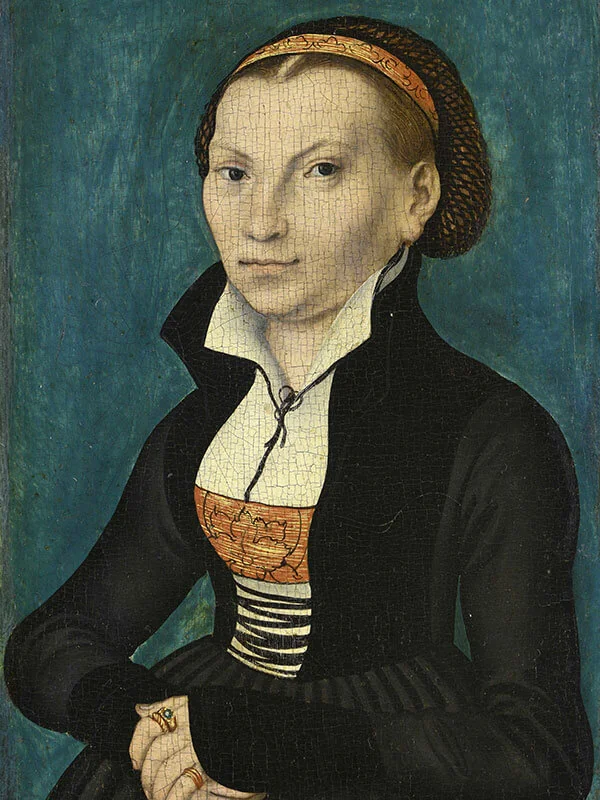
Image from Wikipedia
Image from Wikipedia
Katharina von Bora – the clever reformer behind one of the most famous names in Reformation history
A woman between monastery, escape, and historical impact
Katharina von Bora, known as Katharina Luther after her marriage, is one of the most influential female figures of the Reformation era. Born on January 29, 1499, in Lippendorf and dying on December 20, 1552, in Torgau, she became the wife of Martin Luther and simultaneously an independent historical personality with economic acumen, organizational talent, and remarkable presence in a male-dominated era. Her biography intertwines monastic life, escape, marriage, family life, and a firm place in Germany's cultural memory. ([geschichte.sachsen.de](https://www.geschichte.sachsen.de/katharina-von-bora-5514.html))
Origin and early influences
Different lines of reconstruction exist in research regarding Katharina von Bora's origins; however, it is certain that she was embedded in a noble environment and educated at the Cistercian convent of Marienthron near Grimma. There, she not only became familiar with monastic order but also with the writings of Martin Luther, which significantly influenced her thinking. This early phase marks the beginning of a biography that later gained historical significance far beyond her personal life. ([geschichte.sachsen.de](https://www.geschichte.sachsen.de/katharina-von-bora-5514.html))
The escape from the monastery and the step into Reformation history
In 1523, Katharina left the convent with other nuns and reached Wittenberg. This escape was more than a personal break from monastic discipline: it represented a symbolic rupture with the old order and directly led her into the orbit of the Reformation movement. In Wittenberg, she met Martin Luther, who two years later established their marriage, creating one of the most well-known connections in European religious history. ([geschichte.sachsen.de](https://www.geschichte.sachsen.de/katharina-von-bora-5514.html))
Marriage to Martin Luther and the establishment of a new household model
The engagement and wedding with Luther took place in 1525, with the wedding celebration held on June 27, 1525. From this marriage emerged not only a family but also a much-discussed way of life in the early modern period: Katharina organized the household, utilized the brewing rights derived from the monastery, raised livestock, and rented several plots of land. In the sources, she appears not merely as the companion of the reformer but as an economically active woman with clear responsibilities in the daily life of the young Protestant family. ([luther.de](https://www.luther.de/themen/bora0.html))
Family life, economic independence, and daily life in Wittenberg
The marriage produced several children: Johannes, Elisabeth, Magdalena, Martin, Paul, and Margarethe. At the same time, records show that after Luther's death, Katharina lived under difficult financial conditions and had to secure her livelihood by taking in boarders. This aspect emphasizes her resilience and practical instinct. She was a woman who not only represented but also organized, managed, and acted in daily life. ([luther.de](https://www.luther.de/themen/bora0.html))
Character, contemporaries, and historical perception
Contemporary perception describes Katharina as an intelligent and quick-witted conversational partner. This characterization elevates her from the shadows of mere supporting roles and explains why her name remains present in biographies, films, and cultural-historical representations to this day. Her personality embodied a mix of steadfastness, intelligence, and practicality – qualities that made her a central figure in Reformation history. ([geschichte.sachsen.de](https://www.geschichte.sachsen.de/katharina-von-bora-5514.html))
Reception in literature, film, and cultural memory
Katharina von Bora has been the subject of numerous literary and cinematic works. Her story appears in documentaries, feature films, and popular historical narratives, including the feature film Luther from 2003 and the TV movie Katharina Luther from 2017. Her life has also been repeatedly reevaluated in nonfiction books and biographical studies, showcasing how deeply her role as a woman, partner, and reform figure is embedded in cultural memory. ([de.wikipedia.org](https://de.wikipedia.org/wiki/Katharina_von_Bora))
Cultural influence and historical significance
As the wife of the reformer, Katharina von Bora is far more than a historical peripheral figure. She represents female agency during a time of upheaval, the transition from monastic life to a new social reality, and the connection of religion, household, economy, and family politics. Her influence lies not in a musical or discographic career but in her enduring role in understanding the Reformation and Protestant everyday life. ([geschichte.sachsen.de](https://www.geschichte.sachsen.de/katharina-von-bora-5514.html))
Positioning of the sources and academic context
The historical research on Katharina von Bora is extensive and ranges from genealogical studies to standard biographical works. The sources are not always consistent, especially regarding questions of origins and family details. This multifaceted transmission makes her figure so interesting: she is both a historical individual and a projection surface for Reformation history, women's studies, and cultural memory. ([de.wikipedia.org](https://de.wikipedia.org/wiki/Katharina_von_Bora))
Conclusion: Why Katharina von Bora continues to fascinate
Katharina von Bora fascinates because she combines historical presence with practical strength. She was a nun, refugee, wife, mother, household manager, and a woman at the center of a significant religious upheaval. Understanding her story provides insight not only into Martin Luther but also into the social reality of the Reformation itself. Her life story invites us to experience the sites of this era with new eyes—as places of transformation, courage, and remarkable female self-assertion. ([geschichte.sachsen.de](https://www.geschichte.sachsen.de/katharina-von-bora-5514.html))
Official channels of Katharina von Bora:
- Instagram: no official profile found
- Facebook: no official profile found
- YouTube: no official profile found
- Spotify: no official profile found
- TikTok: no official profile found