
Martin Piekar
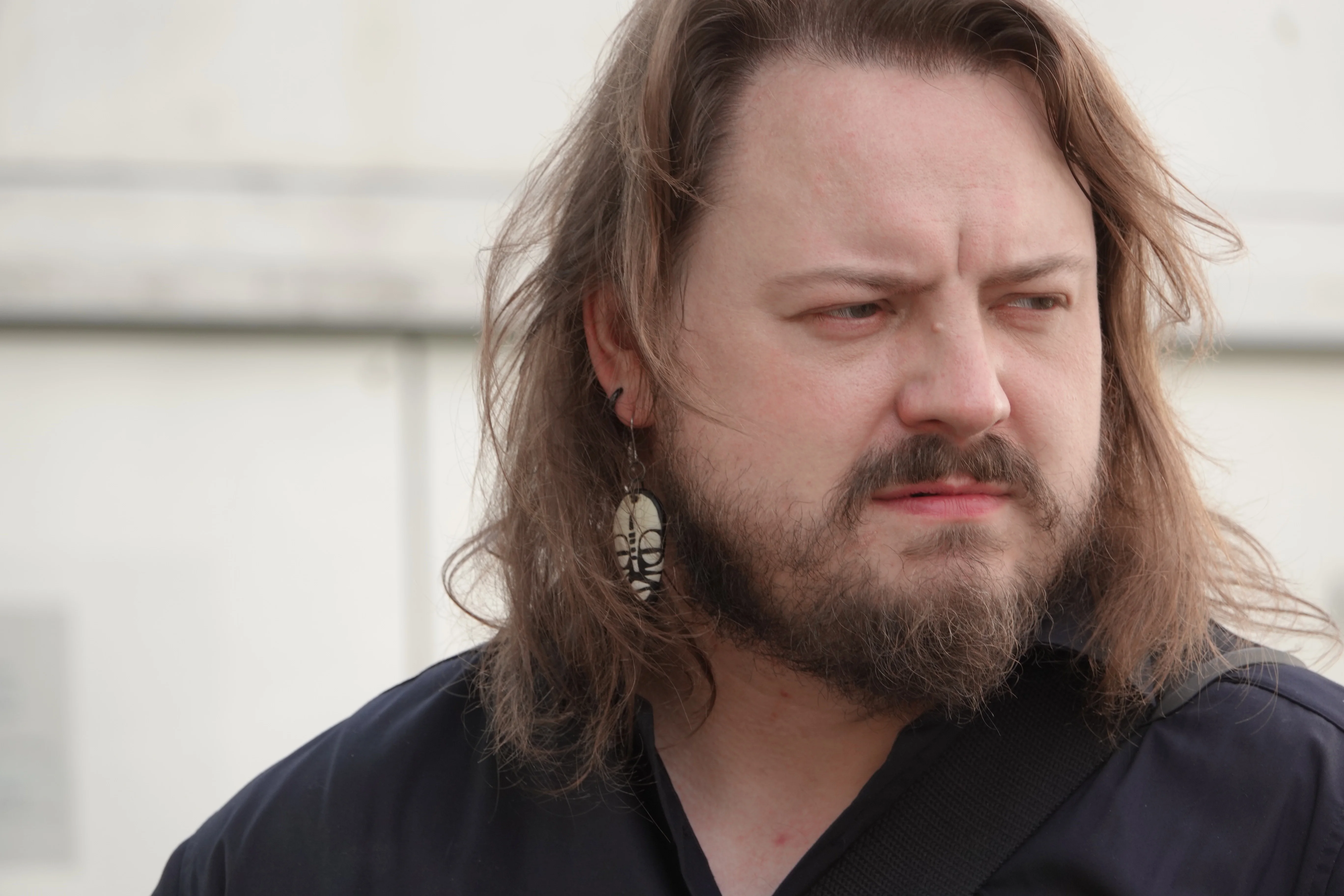
Image from Wikipedia
Image from Wikipedia
Martin Piekar – the uncompromising voice of a new German-Polish contemporary poetry
A poet between migration, philosophy, and the present
Martin Piekar, born on August 5, 1990, in Bad Soden am Taunus, is one of the most prominent voices in contemporary German-language poetry. He lives in Germany, writes in German, and works as a writer and teacher; his biography is shaped by a Polish-German family history, philosophical thinking, and an early, determined approach to language. As a teenager, he began writing and formed a literary career that closely intertwines personal experience, political perception, and poetic radicalism. ([de.wikipedia.org](https://de.wikipedia.org/wiki/Martin_Piekar))
Biographical roots: Origin as literary tension
Piekar was born as the child of Polish immigrants in Hesse; his parents fled from the People's Republic of Poland to the Federal Republic of Germany in the 1980s. This biographical constellation continues to shape his writing today as it charges questions of language, belonging, memory, and social positioning with existential weight rather than abstract notions. From this experience, he develops a literature that never separates the private from the political and consistently engages with the frictions of the present. ([de.wikipedia.org](https://de.wikipedia.org/wiki/Martin_Piekar))
His path led him through philosophy and history at the Johann Wolfgang Goethe University in Frankfurt am Main. At the same time, he joined sexyunderground, a group of young authors at the Literaturhaus Frankfurt, and published texts in magazines such as etcetera and Federwelt. Even in this early phase, an author emerges who not only writes but understands language as a space for thought: analytically, rhythmically, self-critically, and with a keen awareness of social reality. ([de.wikipedia.org](https://de.wikipedia.org/wiki/Martin_Piekar))
The literary breakthrough: Awards, attention, and public readings
The real breakthrough came in 2012 with the win of open mike in the poetry category and participation in the Literaturlabor Wolfenbüttel. These milestones brought Piekar greater visibility and marked the moment when the young writer became a widely recognized poet. His own website describes this phase as a turning point where a broader audience first became aware of him. ([de.wikipedia.org](https://de.wikipedia.org/wiki/Martin_Piekar))
Subsequently, he received several important awards: twice the hr2 Literature Prize, the Jury Prize at the Irseer Pegasus, a nomination for the Meran Poetry Prize, as well as the KELAG Prize and the BKS Bank Audience Award at the Days of German-Language Literature in Klagenfurt in 2023. In 2024, he added the Robert Gernhardt Prize. This history of awards demonstrates that Piekar's work is not only recognized within the literary scene but is also considered distinctive and relevant in several institutions of German-language literature. ([de.wikipedia.org](https://de.wikipedia.org/wiki/Martin_Piekar))
Works and bibliography of language: Books instead of albums, but with clear dramaturgy
In a stricter sense, Martin Piekar does not possess a discography, but rather a carefully growing bibliography that can be read like a musical development: Bastard Echo was published in 2014, AmokperVers in 2018, Livestream & Leichen in 2023, and in 2026 the next major step will follow with Vom Fällen eines Stammbaums. The titles alone reveal his poetic signature: tough, contemporary, vivid, and often infused with a tension between the digital age, physicality, and societal pressure. Publishers like Verlagshaus Berlin and Rowohlt anchor these books in a professional literary environment. ([de.wikipedia.org](https://de.wikipedia.org/wiki/Martin_Piekar))
AmokperVers and Livestream & Leichen particularly illustrate how Piekar works with language: he layers everyday language, political experience, and inner monologues into a poetry that does not smooth over edges. The Verlagshaus Berlin text for AmokperVers emphasizes his radically subjective language and the movement between the private and the political, while reviews of Livestream & Leichen highlight the dark, digital, and socially critical spaces of these poems. Thus, a body of work emerges that can be read as uncomfortable, precise, and highly relevant in contemporary German poetry. ([verlagshaus-berlin.de](https://verlagshaus-berlin.de/programm/amok-pervers/?utm_source=openai))
Poetic handwriting: Sound, rhythm, and political sharpness
Piekar's style combines philosophical reflection with an intense sound dimension. On his website, he describes that he is interested in pronunciation, the rhythm of language, and the connection between poetry and song lyrics; he explicitly treats writing workshops and readings as places where language history, contemporary phenomena, and creative expression intersect. This openness to form and performative presence gives his literature a strong stage presence that is also palpable during readings. ([martin-piekar.net](https://martin-piekar.net/schreibwerkstaetten-schullesungen/?utm_source=openai))
His radical presence is characteristic. Carolin Callies praises the "incredible immediacy" of his language material, and therein lies one of the strengths of his texts: they address societal tensions not as buzzwords but as experiential pressure. Piekar writes about digital damage, fear, loneliness, politics, and identity with a linguistic energy that does not seek distance but runs straight into the midst of the conflict field. ([martin-piekar.net](https://martin-piekar.net/category/schreiben/?utm_source=openai))
Cultural influence: German-Polish perspective and literary relevance
Martin Piekar is more than an award-winning poet; he represents a literary perspective that intertwines German-Polish experience, urban contemporary awareness, and intellectual self-inquiry. In interviews and portraits, it becomes clear that he sees himself as a German-Polish author and understands his origin not as a footnote but as a poetic and societal resource. His texts thus open an important access to questions of migration, multilingualism, and cultural belonging in German-language literature. ([martin-piekar.net](https://martin-piekar.net/category/schreiben/?utm_source=openai))
His work as a teacher and leader of writing workshops also shapes his profile. He conveys language not only as an art form but as a space for thought and experience where philosophy, emotion, and social structures converge. This combination of teaching, practice, and literary production makes him an authority in the field of young German-language poetry, whose relevance extends far beyond mere book publications. ([martin-piekar.net](https://martin-piekar.net/schreibwerkstaetten-schullesungen/?utm_source=openai))
Current projects and new publications
The most recent and upcoming projects demonstrate that Piekar's literary development is by no means complete. In 2023, Livestream & Leichen was released, followed by numerous readings and public appearances in 2024, and in 2026, Rowohlt announces his next major title Vom Fällen eines Stammbaums. This keeps Piekar present in literary discussions and proves that his work continuously explores new forms and thematic depths. ([martin-piekar.net](https://martin-piekar.net/2023/06/28/was-ein-jahr-mehr/?utm_source=openai))
It is precisely this continuity that makes his career exciting: from early writing talent through competition successes to an established author who presents new books with fresh linguistic urgency. His work does not grow as a mere sequence of publications but as a coherently developed poetic position. For those who wish to read contemporary poetry as a magnifying glass for society and interior life, Martin Piekar offers a particularly dense and uncompromising approach. ([de.wikipedia.org](https://de.wikipedia.org/wiki/Martin_Piekar))
Conclusion: Why Martin Piekar remains so captivating
Martin Piekar fascinates because he brings biography, language, and the present into a highly concentrated literary form. His texts are personal and political, theoretically reflected yet immediate, poetic and socially aware. This very tension makes him one of the most important voices of his generation. Those who want to experience how literature acts as a living language should read Martin Piekar and experience him live at one of his readings. ([de.wikipedia.org](https://de.wikipedia.org/wiki/Martin_Piekar))
Official channels of Martin Piekar:
- Instagram: no official profile found
- Facebook: no official profile found
- YouTube: no official profile found
- Spotify: no official profile found
- TikTok: no official profile found
Sources:
- Wikipedia: Martin Piekar
- Martin Piekar – Official Website
- Martin Piekar – About Me
- Verlagshaus Berlin – Amok PerVers
- Bachmann Prize ORF – Martin Piekar, D/PL
- hr2 – Doppelkopf with Martin Piekar
- Porta Polonica – Poet Martin Piekar
- Feldkircher Poetry Prize – Martin Piekar
- Rowohlt Publishing – Martin Piekar
- Wikipedia: Image and text source