
Michael Kleeberg
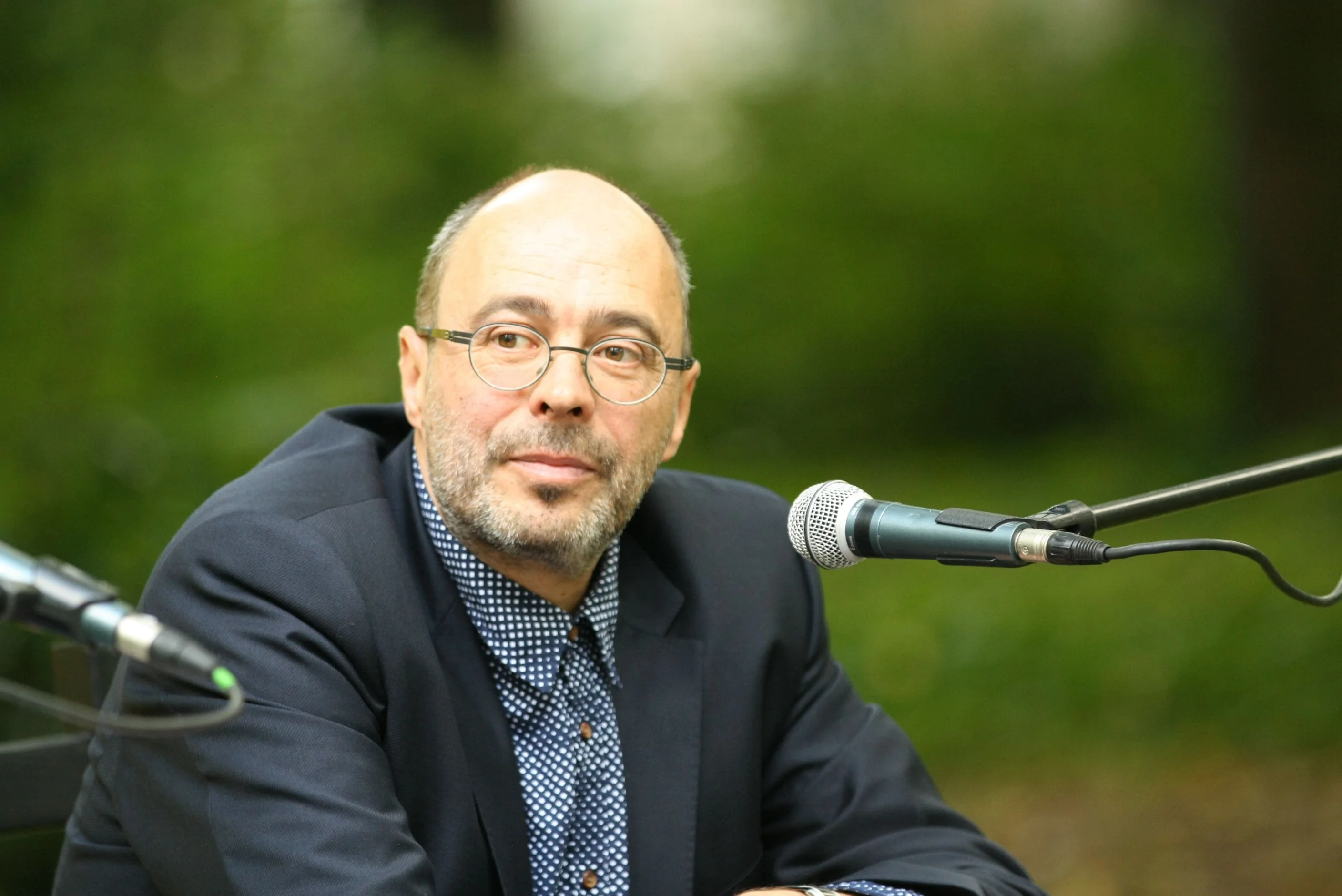
Image from Wikipedia
Image from Wikipedia
Michael Kleeberg
Michael Kleeberg: Precise Literature between Cosmopolitanism, Memory, and Great Narrative Art
Michael Kleeberg, born on August 24, 1959 in Stuttgart, is one of the most prominent German writers and translators of his generation. His work combines narrative expansiveness with precise observation, cultural experience, and a distinctive stylistic assurance. For decades, this has resulted in a music career of literature in the best sense: no stage, but a presence that asserts itself in language, rhythm, and tone. ([de.wikipedia.org](https://de.wikipedia.org/wiki/Michael_Kleeberg?utm_source=openai))
Those who read Kleeberg encounter not an author of quick effects but a writer with patience, depth, and an awareness of form. His texts arise from experience, travel, translation, and a long engagement with European and American literature. It is precisely this mix of worldly wisdom and narrative discipline that makes him so exciting for readers. ([munzinger.de](https://www.munzinger.de/register/portrait/biographien/michael%2Bkleeberg/00/22862?utm_source=openai))
Biographical Roots and Literary Influence
Kleeberg studied political science, modern history, and visual communication in Hamburg after finishing high school. Before establishing himself as an author, he worked in various jobs, including as a dockworker, nurse, freelance journalist, and private tutor. This biographical diversity continues to shape his writing today: his prose knows work environments, transitions, social tensions, and the experience of being on the move. ([munzinger.de](https://www.munzinger.de/register/portrait/biographien/michael%2Bkleeberg/00/22862?utm_source=openai))
In the 1980s and 1990s, he lived in various places including Rome, Berlin-Kreuzberg, Amsterdam, and Paris; from 1987 to 1994, he co-owned a small advertising agency in Paris. Concurrently, he worked as a freelance author and translator from French and English. These years abroad significantly broadened his perspective on language, society, and literary history. ([munzinger.de](https://www.munzinger.de/register/portrait/biographien/michael%2Bkleeberg/00/22862?utm_source=openai))
Since 2000, Kleeberg has lived and worked in Berlin. The international literature festival berlin describes him as an author who, after twenty years abroad, now works in the capital and has been awarded multiple prizes for his work. His international experience is reflected in a literature that does not strictly represent contemporary Germany but thinks within a European and transatlantic horizon. ([literaturfestival.com](https://literaturfestival.com/authors/michael-kleeberg/))
The Breakthrough: From Skilled Narrator to Influential Novelist
Kleeberg celebrated his literary breakthrough with the novel Ein Garten im Norden. Germany's Deutschlandfunk retrospectively hailed him as a significant author of the middle generation and emphasized that this novel marked a decisive breakthrough. This marked the beginning of a phase in which Kleeberg was perceived not only as a precise storyteller but also as a large-scale novelist. ([deutschlandfunk.de](https://www.deutschlandfunk.de/musik-und-fragen-zur-person-der-schriftsteller-michael-100.html?utm_source=openai))
With his later novels, his profile as an author of complex social novels intensified, connecting private life stories with historical and cultural shifts. His books employ temporal jumps, interior perspectives, and a pronounced sensitivity to social micro-dramas. Kleeberg does not merely compose plots but narrative landscapes in which generations, social environments, and political climate changes become visible. ([michaelkleeberg.de](https://www.michaelkleeberg.de/seite/))
Narrative Technique: Tone, Rhythm, and Perspective
Kleeberg's handling of the narrative voice is particularly distinctive. Deutschlandfunk describes how he shifts between first-person, collective "we," second-person, and omniscient narration; it is precisely this flexibility that gives his novels an extraordinary pull. His style combines ironic distance with exact empathy, making the texts both analytical and emotionally accessible. ([michaelkleeberg.de](https://www.michaelkleeberg.de/seite/))
Critics also highlight his affinity with Marcel Proust, John Updike, and Philip Roth, without reducing him to mere influences. Rather, Kleeberg creates a unique tone that intertwines complex thoughts, precise depictions of social environments, and vast social spaces. In this combination of composition and observation lies a significant part of his authority. ([michaelkleeberg.de](https://www.michaelkleeberg.de/seite/))
Karlmann Trilogy and the Social Perspective
A central phase of his work is the Karlmann trilogy, consisting of Karlmann, Vaterjahre, and Dämmerung. According to several critics, the series traces around forty years of West German social history and is considered one of the most ambitious projects in contemporary literature. The work connects individual life crises with the history of the old and new Federal Republic. ([michaelkleeberg.de](https://www.michaelkleeberg.de/seite/))
The reception is clear: Der Spiegel emphasizes the ability for reflective empathy, Der Tagesspiegel speaks of a profound assessment of the present, and Süddeutsche Zeitung categorizes the trilogy as an unprecedented project. Such voices show how strongly Kleeberg is perceived as an author of consequence within the literary establishment. His novels provide not just content, but interpretation. ([michaelkleeberg.de](https://www.michaelkleeberg.de/seite/))
The SWR Best List also honored Dämmerung as the conclusion of a significant literary narrative movement. It highlights that Kleeberg takes a character as seriously as their perceptions, thereby generating a social panorama with enormous density. In this connection between human accuracy and formal control lies one of his greatest strengths. ([michaelkleeberg.de](https://www.michaelkleeberg.de/seite/))
Translator, Mediator, and European Reader
As a translator, Kleeberg is much more than a side job to his novels. The international literature festival berlin mentions authors such as Marcel Proust, Graham Greene, and Paul Bowles among those he has translated. Thus, he operates at the crossroads of German-language literature and international narrative traditions. ([literaturfestival.com](https://literaturfestival.com/authors/michael-kleeberg/))
This translation work sharpens his sense for sentence structure, rhythm, and semantic nuances. Anyone conveying Proust, Greene, or Bowles is not working only with words, but with moods, cultural codes, and literary temperaments. It is this understanding that explains Kleeberg's assured hand in linguistic registers and narrative transitions. ([literaturfestival.com](https://literaturfestival.com/authors/michael-kleeberg/))
Current Projects and Literary Presence
In 2026, Kleeberg will remain present. His official website announces Berlin book premieres for May 2026, as well as a new book titled Achilles in Taormina, which is set to be published by Penguin in May 2026. This indicates that his work continues to evolve and remains anchored in literary discourse. ([michaelkleeberg.de](https://www.michaelkleeberg.de/seite/))
The announcement of the new title links Kleeberg's present with a renewed engagement with myth, research, and literary imagination. The official website describes the text as a search for Hemingway's last secret and as a journey through locations, memories, and fictions. This underscores Kleeberg's preference for literature as a precisely working form of approach. ([michaelkleeberg.de](https://www.michaelkleeberg.de/seite/))
Cultural Influence, Awards, and Literary Authority
Kleeberg's work has received numerous awards. The international literature festival berlin includes the Hölderlin Prize 2015, the Literature Prize of the Konrad Adenauer Foundation 2016, and his Frankfurt Poetics Lectures 2017 among them. Such accolades confirm his standing in the literary field and underscore the lasting relevance of his work. ([literaturfestival.com](https://literaturfestival.com/authors/michael-kleeberg/))
His cultural impact lies not only in awards but also in the consistency of his thematic program: memory, origin, history, desire, social change, and the art of storytelling. Kleeberg writes about the present without smoothing over its fractures. It is precisely in this that his authority as a novelist, translator, and literary chronicler lies. ([michaelkleeberg.de](https://www.michaelkleeberg.de/seite/))
The press also praises his precise observation and his confident handling of great life stories. Deutschlandfunk, Der Spiegel, Der Tagesspiegel, and Süddeutsche Zeitung create the image of an author who does not merely illustrate society but structurally penetrates it. Michael Kleeberg thus stands for literature that is designed for the long haul and treats its readers with respect. ([michaelkleeberg.de](https://www.michaelkleeberg.de/seite/))
Conclusion: An Author for Readers Who Appreciate Depth and Form
Michael Kleeberg is compelling because he combines narrative ambition with stylistic precision. His novels open spaces where individual biographies, historical upheavals, and cultural experiences intertwine. Those who cherish literature as an art of condensation and a seismographic observation of time will find in Kleeberg an author of exceptional caliber. ([michaelkleeberg.de](https://www.michaelkleeberg.de/seite/))
His books are worth reading because they not only tell stories but also offer interpretations of the world. Anyone wanting to experience great contemporary literature should read Michael Kleeberg and attend his readings when the opportunity arises. There, the blend of intellectual precision and narrative passion that makes his work so distinctive unfolds. ([michaelkleeberg.de](https://www.michaelkleeberg.de/seite/))
Official Channels of Michael Kleeberg:
- Instagram: no official profile found
- Facebook: no official profile found
- YouTube: no official profile found
- Spotify: no official profile found
- TikTok: no official profile found