
Thomas C. Breuer
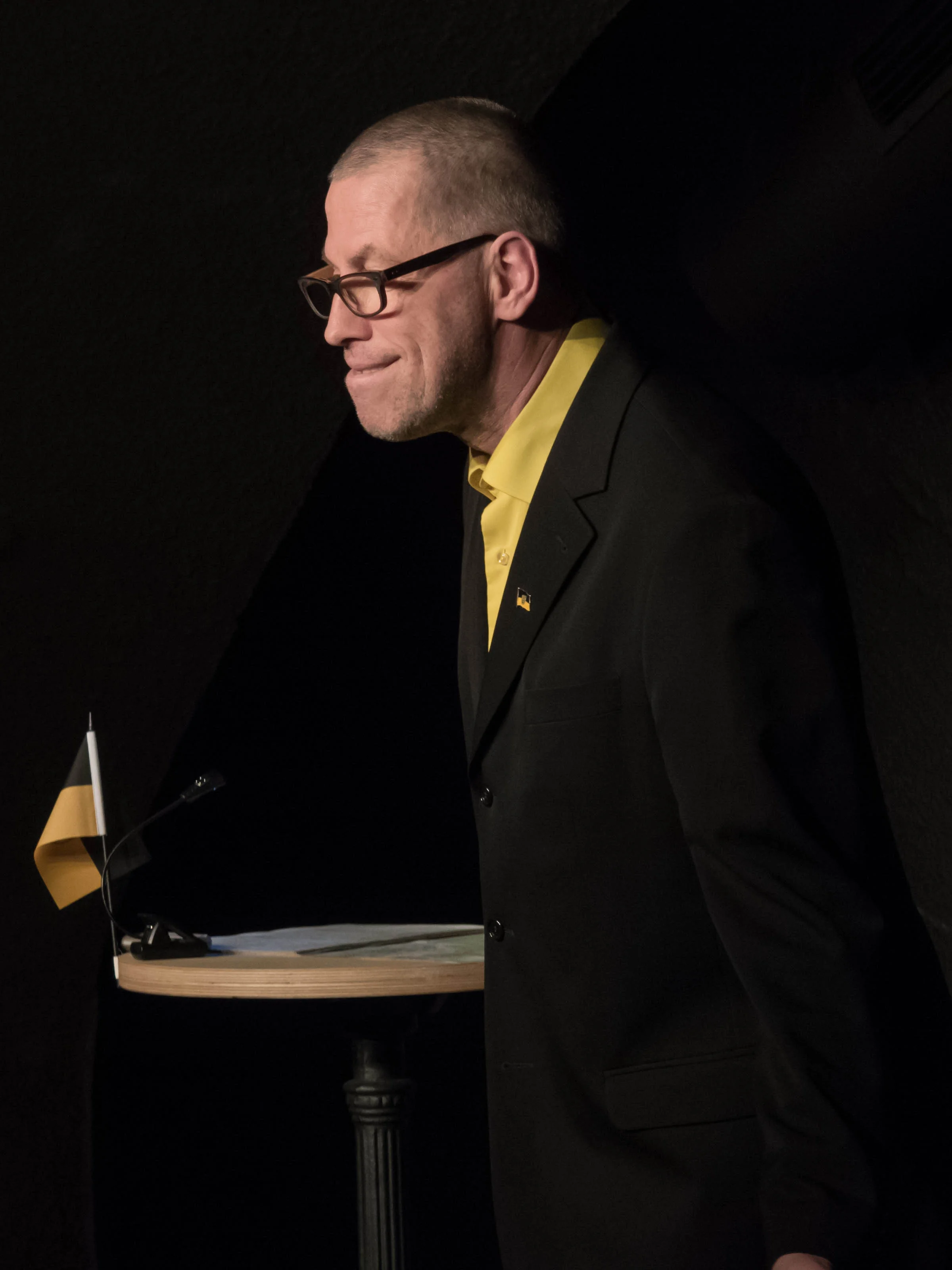
Image from Wikipedia
Image from Wikipedia
Thomas C. Breuer: Word Acrobat, Cabaret Artist, and Master of Satirical Connections
A Unique Storyteller Between Cabaret, Literature, and Stage Presence
Thomas C. Breuer, born on October 5, 1952, in Eisenach, is one of those German authors and cabaret artists who not only use language but also shape it audibly. His contributions thrive on seemingly contradictory elements, on wordplay, on precise connections between words, and on satirical twists that turn everyday concepts into surprising punchlines. This is precisely where the distinctive signature of an artist emerges, who has accompanied audiences on cabaret stages, in radio, and on television for decades. ([de.wikipedia.org](https://de.wikipedia.org/wiki/Thomas_C._Breuer))
Biographical Beginnings: Eisenach, Bad Ems, Koblenz, and Trier
Breuer grew up in Bad Ems, later lived in Koblenz, and completed an apprenticeship as a bookseller in Trier. This early closeness to texts, books, and linguistic precision aligns strikingly well with his later music career in the broader sense: not as a musician, but as a language artist with a sense of rhythm, timing, and stage instinct. Since 1977, he has been performing as a cabaret artist and has developed into a voice that transforms local observations, travel experiences, and societal frictions into pointed texts. ([de.wikipedia.org](https://de.wikipedia.org/wiki/Thomas_C._Breuer))
His artistic path took him from his beginnings in Trier to cabaret stages in Germany, Switzerland, and North America. Deutschlandfunk portraits him as a well-traveled, wordy artist who early on expanded his career with his own programs and intertexts after initially reaching the stage through another artist's tour. This resulted in a stage persona that combines ironic distance, precise observation, and linguistic elegance. ([deutschlandfunk.de](https://www.deutschlandfunk.de/thomas-c-breuer-letzter-aufruf-100.html))
The Breakthrough on Stage and the Path to His Own Voice
On November 30, 1977, Thomas C. Breuer appeared for the first time on stage with a cabaret performance. From there, he embarked on a long, varied career that encompassed not only theater but also radio and television. His status as a word acrobat remained particularly significant: an artist who does not rely on crude punchlines but on linguistic density, perspective shifts, and satirical friction. ([deutschlandfunk.de](https://www.deutschlandfunk.de/thomas-c-breuer-letzter-aufruf-100.html))
Deutschlandfunk describes him as a cabaret artist who moved through a variety of thematic worlds: from travels in North America to Swiss topics and even culinary programs. In collaboration with star chef Vincent Klink, he even developed a cabaret format centered around pleasure and culinary arts. This versatility lends a special authority to his work as it cannot be reduced to a single genre but intertwines literature, satire, travel literature, and stage art. ([deutschlandfunk.de](https://www.deutschlandfunk.de/thomas-c-breuer-letzter-aufruf-100.html))
Literary Production: Novels, Satire, and Thematic Diversity
Breuer wrote novels and satires and has published an impressive array of books over the years. Among the titles mentioned are Säntimäntls Reise (1986), Schnell Époque. Racy Mood Pictures from Germany (1987), Sekt in der Wasserleitung (1996), Heidelberger Demenz (1997), Stadt Land Blues (2000), Schweizerkreuz und quer (2001), Paradies etc. (2002), Schweizfahren (2005), and Hitze in Dosen. A Soundtrack (2007). Already the titles reveal the signature of an author who works with linguistic wit, travel observation, and cultural critique. ([de.wikipedia.org](https://de.wikipedia.org/wiki/Thomas_C._Breuer))
Particularly, Hitze in Dosen. A Soundtrack suggests how closely Breuer thinks of literary form and musical metaphor. Even though he is not a musician, his writing possesses a clear musical structure: repetition, variation, rhythmic emphasis, and comedic timing. For readers, this results in a literary arrangement that makes his stage presence palpable on paper. ([de.wikipedia.org](https://de.wikipedia.org/wiki/Thomas_C._Breuer))
Media Work, Radio, and Expanding Artistic Reach
A central element of his music career in the broader cultural sense is his work with radio and television. Breuer has regularly worked for various TV shows and, according to Deutschlandfunk, was early on contributing to SWF 3, later for WDR, and continues to be active with Swiss Radio. This media continuity strengthens his authority as a cabaret artist and author because it has brought his texts to various audiences. ([de.wikipedia.org](https://de.wikipedia.org/wiki/Thomas_C._Breuer))
The Deutschlandfunk portrait also mentions that he performed in a duo with Jochen Malmsheimer and was heard monthly on radio broadcasts with Henning Venske, Bernd Gieseking, and Urban Priol. This shifted his profile between solo cabaret, ensemble work, and radio condensation. This blend makes Breuer an artist with remarkable breadth and strong recognizability. ([deutschlandfunk.de](https://www.deutschlandfunk.de/thomas-c-breuer-letzter-aufruf-100.html))
Artistic Development: Farewell to Cabaret and New Formats
In 2018, Breuer announced that he would end his career as a cabaret artist; on his official website, he describes the farewell from cabaret as completed while also referring to new literary formats and themed evenings. The official site mentions programs such as Retour, Alles muss Rausch, Stubenlesungen, and since 2025, Gesünder kränkeln. Thus, the artistic development remains dynamic: the stage performer does not retreat from the public space but merely changes his form. ([de.wikipedia.org](https://de.wikipedia.org/wiki/Thomas_C._Breuer))
Over 3,800 performances, regular radio work, and presence on cabaret stages in several countries attest to the reach of this career. The Salzburg Stier 2014 additionally marks one of the most important awards of his career and underscores his position in the German-speaking cabaret scene. The award represents recognition by the scene and sustainable artistic quality. ([tc-world.com](https://tc-world.com/?utm_source=openai))
Style and Impact: Satire as Language Art
Breuer's style is based on the reevaluation of the everyday. He connects seemingly incompatible elements, works with arbitrary wordplay, and creates satirical statements that appear both playful and precise. This form of linguistic composition makes his texts small constructions of irony, observation, and surprising logic. ([de.wikipedia.org](https://de.wikipedia.org/wiki/Thomas_C._Breuer))
Anyone who reads Breuer or experiences him on stage encounters not a fleeting form of comedy but a well-crafted form of cabaret that approaches literature, travel writing, and essays. His own web presence emphasizes that he does not offer "industrial goods" but handcrafted texts, and this is where the strength of his artistic profile lies. The comedy arises not from volume but from precision, rhythm, and intellectual play. ([tc-world.com](https://tc-world.com/?utm_source=openai))
Cultural Influence and Artistic Classification
Breuer operates within a tradition of German-speaking cabaret art, where language itself becomes an instrument. His work represents the connection between literature and stage, satire and societal observation, travel experience, and self-irony. It is particularly noteworthy that he incorporates both regional and international experiences into his texts, thereby developing a clear cultural perspective. ([deutschlandfunk.de](https://www.deutschlandfunk.de/thomas-c-breuer-letzter-aufruf-100.html))
The official website refers to ongoing programs, readings, and thematic evenings, indicating that Breuer remains relevant even beyond the classic cabaret stage. For music and culture audiences alike, interesting is the way he organizes language rhythmically and constructs texts like scores. This blend of authorship, stage presence, and satirical arrangement makes him a lasting figure in the German-speaking cultural space. ([tc-world.com](https://tc-world.com/?utm_source=openai))
Conclusion: An Artist Who Makes Language Audible
Thomas C. Breuer is captivating because he makes language an event. His career combines cabaret, literature, radio, and finely observed satire into a work based on experience, expertise, and artistic consistency. Those who appreciate precisely formulated punchlines, astute observations, and an unmistakable stage voice will discover in Breuer one of the most distinctive word artists of his generation. An evening with him promises not routine but an encounter with language in its most vibrant form. ([de.wikipedia.org](https://de.wikipedia.org/wiki/Thomas_C._Breuer))
Official Channels of Thomas C. Breuer:
- Instagram: No official profile found
- Facebook: No official profile found
- YouTube: No official profile found
- Spotify: No official profile found
- TikTok: No official profile found